Voice-to-Text Intelligence for Operations

I
Head (AI Cloud Infrastructure), Presear Softwares PVT LTD
Search for a command to run...
Head (AI Cloud Infrastructure), Presear Softwares PVT LTD
No comments yet. Be the first to comment.
Explore the forefront of AI innovation with Presear Softwares' AI Series, delving into machine learning for automation and neural networks for predictive analytics, unlocking AI's transformative potential across industries.
How Presear Softwares Pvt Ltd Built a Rapid Testing Platform That Reduced Lab Processing Time by 50%
How Presear Softwares Empowered the National Institute of Wind Energy with Intelligent Asset Tracking
An ICSSR Project Implementation by Presear Softwares
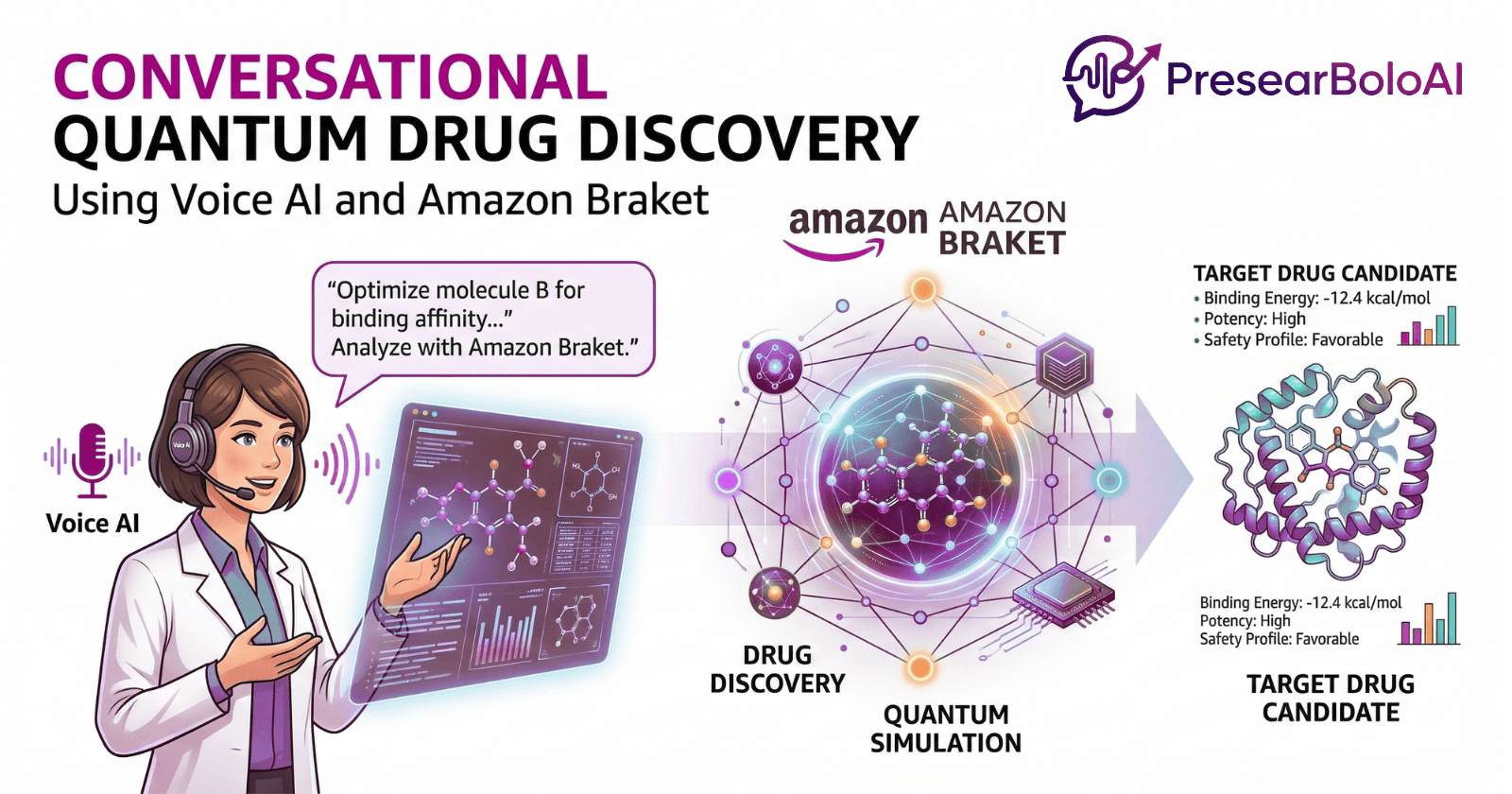
A Hybrid Architecture for Voice-Driven Molecular Simulation and Quantum Chemistry Experiments
How PresearVisionXTrans™ Can Secure Large Gatherings like Holi
How Presear Engineered a Burst-Resilient Government Recruitment Portal using AI-Ready Scalable Architecture
In modern enterprise environments, a significant portion of operational knowledge is generated through voice-based interactions—customer support calls, field service reports, emergency communications, logistics coordination calls, medical dictations, and operational briefings. Despite the importance of these communications, much of this information remains unstructured, undocumented, or poorly captured, resulting in lost insights, compliance risks, operational inefficiencies, and limited analytics capabilities.
Organizations across industries such as call centers, logistics operations, and healthcare systems depend heavily on verbal communication for daily decision-making. However, without intelligent systems that can convert speech into structured, searchable, and analyzable data, these valuable conversations remain underutilized. Traditional manual transcription methods are time-consuming, expensive, and prone to human error, while basic speech-to-text tools often fail to provide context understanding, domain adaptation, or actionable intelligence.
Voice-to-Text Intelligence platforms powered by advanced artificial intelligence (AI), natural language processing (NLP), and machine learning offer a transformative solution. These systems not only transcribe speech accurately in real time but also extract insights, categorize conversations, detect intent, identify operational risks, and convert unstructured voice data into structured enterprise intelligence.
Presear Softwares Pvt. Ltd., with its expertise in AI-driven enterprise solutions, data engineering, and intelligent automation platforms, is well positioned to develop advanced Voice-to-Text Intelligence systems tailored for operational environments. This article presents a comprehensive use case demonstrating how Presear can enable organizations to unlock the hidden value of voice-based operational data across call centers, logistics networks, and healthcare systems.
Voice communication continues to dominate operational workflows in many industries. Customer service agents handle thousands of calls daily, logistics coordinators communicate through dispatch calls, and healthcare professionals record verbal notes during patient interactions. However, most of this information is not systematically captured in structured formats.
Key challenges include:
Loss of Operational Insights
Important operational details discussed in calls or field reports may never be formally documented, leading to knowledge gaps and missed improvement opportunities.
Manual Documentation Burden
Employees often spend significant time manually writing reports or summarizing conversations, reducing productivity and introducing inconsistencies.
Compliance and Audit Risks
Industries such as healthcare and financial services require accurate documentation of interactions. Incomplete or inaccurate records can lead to compliance issues.
Limited Real-Time Decision Support
Without real-time transcription and analytics, supervisors and operations teams cannot monitor live interactions effectively to identify risks or performance issues.
Difficulty in Knowledge Retrieval
Searching through audio recordings for specific information is time-consuming and inefficient, limiting the usefulness of archived communications.
These challenges highlight the need for intelligent systems capable of converting voice data into structured, actionable operational intelligence.
Voice-to-Text Intelligence platforms go beyond simple transcription. By combining advanced speech recognition, NLP, and AI-based analytics, these systems can understand context, extract meaning, and generate actionable insights from conversations. Key capabilities include:
Real-time speech-to-text transcription
Speaker identification and diarization
Context-aware keyword extraction
Intent and sentiment detection
Automated summarization of conversations
Structured report generation
Compliance monitoring and alerting
Searchable voice data archives
Integration with enterprise CRM, ERP, and operational systems
Such platforms enable organizations to transform voice communication into a strategic data asset rather than an operational blind spot.
Presear Softwares Pvt. Ltd. can develop a scalable enterprise-grade Voice-to-Text Intelligence platform designed to integrate seamlessly with operational workflows across industries. The platform would include the following core components:
Advanced AI-powered speech recognition models convert live conversations into accurate text in real time, supporting multiple languages, accents, and industry-specific vocabularies.
Natural language processing models analyze conversation context to identify intents, key operational events, requests, risks, or compliance-related statements.
The platform automatically generates structured reports from conversations, such as service call summaries, dispatch logs, patient notes, or operational incident reports, eliminating manual documentation requirements.
AI-driven analytics detect patterns across thousands of conversations, identifying recurring issues, customer concerns, operational bottlenecks, and performance improvement opportunities.
The system monitors conversations in real time to detect regulatory violations, safety risks, or policy deviations and triggers alerts for supervisors or compliance teams.
The platform integrates with CRM systems, logistics platforms, healthcare information systems, and enterprise dashboards, ensuring seamless data flow into operational processes.
Customer support organizations handle massive volumes of calls daily. Voice-to-Text Intelligence enables automatic transcription of all interactions, allowing supervisors to monitor service quality, detect customer sentiment trends, and identify training opportunities for agents. Automated summaries also reduce after-call documentation time, improving agent productivity and customer response times.
Logistics companies rely heavily on voice-based communication for dispatch coordination, driver reporting, and operational updates. AI-powered voice intelligence systems automatically document dispatch conversations, generate structured delivery reports, and identify operational delays or safety concerns in real time. This improves operational transparency and decision-making speed.
Healthcare professionals frequently record verbal patient notes, emergency calls, and clinical consultations. Voice-to-Text Intelligence systems enable accurate medical transcription, automated patient record updates, and compliance-ready documentation while reducing administrative workload for healthcare staff. Real-time transcription also supports telemedicine services and emergency response coordination.
To ensure successful adoption, Presear Softwares can follow a phased implementation strategy:
Operational Workflow Assessment
Analyze communication workflows, data capture challenges, regulatory requirements, and integration needs across client organizations.
Pilot Deployment
Deploy the Voice-to-Text Intelligence platform in selected operational units such as a call center segment, logistics dispatch team, or hospital department to validate performance.
Enterprise System Integration
Integrate the platform with CRM, ERP, healthcare information systems, and operational dashboards to ensure seamless workflow automation.
Scaling Across Operations
Expand deployment across multiple departments, regions, and operational functions.
Continuous Model Optimization
Continuously refine speech recognition and NLP models using domain-specific datasets to improve transcription accuracy and insight generation.
Organizations implementing Presear’s Voice-to-Text Intelligence solutions can achieve significant operational and strategic benefits:
Improved documentation accuracy
Reduced manual reporting workload
Real-time operational visibility
Enhanced compliance and audit readiness
Faster decision-making through real-time insights
Improved customer service monitoring and performance management
Enhanced operational analytics from conversational data
Better knowledge retention and institutional memory
Increased employee productivity
Improved service quality and operational efficiency
These advantages transform voice communication into a powerful source of enterprise intelligence.
Developing advanced Voice-to-Text Intelligence platforms enables Presear Softwares to strengthen its leadership in AI-driven enterprise automation solutions. By offering domain-specific voice intelligence systems tailored for call centers, logistics companies, and healthcare providers, Presear can create scalable, high-impact solutions that address critical operational challenges.
Such solutions also open long-term opportunities for subscription-based platforms, conversational analytics services, and enterprise integration projects. Over time, Presear can build industry-specific conversational intelligence frameworks that accelerate deployment and expand its presence across multiple sectors.
As enterprises increasingly adopt digital transformation initiatives, voice-based data will become one of the most valuable yet underutilized sources of operational intelligence. Advances in multilingual speech recognition, contextual AI, real-time conversational analytics, and voice-driven automation will significantly expand the capabilities of Voice-to-Text Intelligence platforms.
Organizations that invest early in intelligent voice analytics systems will gain competitive advantages in operational efficiency, compliance readiness, and customer experience optimization. Voice intelligence will play a central role in future enterprise automation strategies.
Unstructured voice communications represent a major gap in enterprise data ecosystems, leading to lost insights, operational inefficiencies, and compliance risks. Voice-to-Text Intelligence platforms powered by AI and NLP offer a transformative solution by converting voice interactions into structured, actionable intelligence.
Through the development of advanced Voice-to-Text Intelligence systems, Presear Softwares Pvt. Ltd. can help organizations across call centers, logistics operations, and healthcare sectors unlock the full value of their conversational data. This use case highlights how intelligent voice analytics solutions can transform operational communication into a strategic enterprise asset, enabling smarter decisions, improved efficiency, and enhanced organizational performance.