Streamlining Lobby Check-ins with Intelligent Visitor Management
How a Corporate Office Reduced Lobby Wait Time by 60% Using Presear VMS
Head (AI Cloud Infrastructure), Presear Softwares PVT LTD
In today’s corporate environment, first impressions matter more than ever. A visitor’s experience begins the moment they step into the lobby. Whether it is a client attending a board meeting, a vendor arriving for a scheduled delivery, or a candidate coming in for an interview, the check-in process often sets the tone for the entire interaction. Unfortunately, in many corporate offices, lobby management remains inefficient, paper-driven, and time-consuming.
This case study explores how a large corporate office modernized its front-desk operations using Presear VMS (Visitor Management System) developed by Presear Softwares Pvt Ltd, resulting in a 60% reduction in lobby wait time, improved security compliance, and a dramatically enhanced visitor experience.
The Problem: Manual Processes Slowing Down Business
The organization in focus is a multi-floor corporate headquarters housing over 1,200 employees. On a typical weekday, the office receives:
150–200 external visitors
30–40 interview candidates
20–25 vendors and service personnel
Occasional high-profile guests and board members
Despite being a modern workplace in every other respect, the visitor management process was outdated.
Challenges Faced:
1. Manual Entry Registers
Visitors were required to fill out physical logbooks with name, phone number, company details, and purpose of visit. This process was slow and prone to errors.
2. Long Waiting Lines During Peak Hours
Morning hours (9 AM – 11 AM) saw heavy congestion. Receptionists struggled to manage queues efficiently.
3. Poor Data Visibility
Visitor records were stored in physical files or spreadsheets, making retrieval difficult during audits or emergencies.
4. Security Gaps
ID verification was inconsistent. There was no automated approval mechanism for hosts.
5. Unprofessional First Impression
In a company that prided itself on digital innovation, handwritten visitor slips created a mismatch in brand perception.
Management realized that improving lobby efficiency was not just an operational issue—it was a business priority.
The Vision: A Fast, Secure, and Contactless Check-in Experience
The company’s facilities and IT team collaborated to define clear goals:
Reduce average visitor check-in time from 4–5 minutes to under 2 minutes
Eliminate paper-based records
Enable pre-approval workflows for meetings
Improve security screening
Offer a seamless and modern visitor experience
After evaluating multiple vendors, the organization selected Presear VMS due to its customization capability, enterprise-grade security, and smooth integration with existing systems.
The Solution: Presear VMS with QR-Based Smart Check-ins
Presear Softwares implemented a QR-enabled Visitor Management System tailored specifically for the corporate office environment.
1. Pre-Registration & QR Invitations
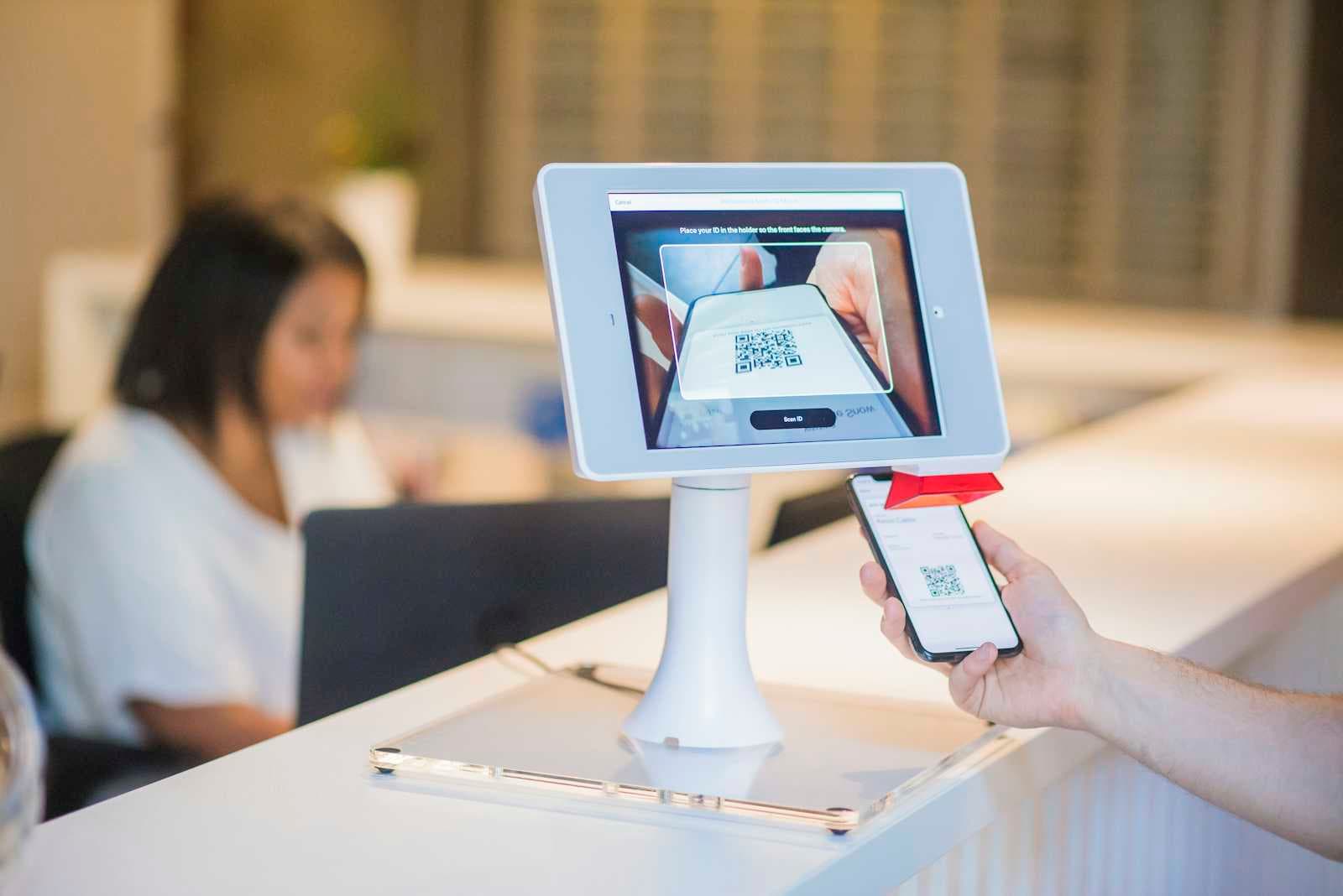
Employees scheduling meetings could pre-register visitors via an internal portal. The system automatically generated a unique QR code and sent it to the visitor via email or SMS.
When visitors arrived at the premises, they simply scanned their QR code at the kiosk.
Result: Check-in time reduced from 4–5 minutes to under 90 seconds.
2. Self-Service Kiosk with Guided Workflow
Interactive self-service kiosks were installed at the reception area. The workflow included:
QR scan or manual mobile number entry
Digital ID verification
Purpose selection
Automatic host notification
Instant badge printing
Receptionists were no longer required to manually enter visitor details. Instead, they could focus on managing exceptional cases and providing hospitality.
3. Real-Time Host Notifications
The system instantly notified the host via:
Email
SMS
Internal communication platform
Hosts could approve or reject visitors digitally. This reduced delays caused by receptionists making multiple phone calls.
4. Enhanced Security & Compliance
Presear VMS introduced:
Digital ID capture and record storage
Blacklist and watchlist management
Real-time visitor tracking
Emergency evacuation reports
Audit-ready logs
In case of emergencies, security teams could instantly generate a list of all visitors present inside the building.
5. Contactless & Hygienic Process
Post-pandemic workplace policies demanded minimal physical contact. QR-based check-ins eliminated:
Shared pens
Physical registers
Manual badge handling
This significantly improved hygiene standards.
Implementation Strategy
The rollout was completed in four structured phases:
Phase 1: Assessment & Customization
Presear’s team conducted an on-site study of peak visitor flow patterns. The solution was customized to align with the company’s branding and security protocols.
Phase 2: Pilot Deployment
One lobby was selected for a 30-day pilot. Metrics were closely monitored:
Average check-in duration
Queue length
Visitor satisfaction feedback
The pilot showed promising results—a 48% reduction in wait time within the first month.
Phase 3: Full-Scale Deployment
Following pilot success, the solution was rolled out across all entry points.
Phase 4: Training & Change Management
Reception staff and security teams underwent training sessions to ensure smooth adoption. Employees were guided on pre-registering guests.
The Results: Measurable Business Impact
After six months of implementation, the company reported:
🔹 60% Reduction in Lobby Wait Time
Average check-in time dropped from 4.5 minutes to 1.8 minutes.
🔹 70% Decrease in Manual Errors
Digital data capture eliminated handwriting mistakes and incomplete records.
🔹 100% Digital Visitor Records
Audit preparation time was reduced significantly.
🔹 35% Improvement in Visitor Satisfaction
Post-visit surveys indicated improved perception of professionalism and efficiency.
🔹 Better Resource Allocation
Receptionists could now focus on hospitality instead of administrative tasks.
Intangible Benefits That Made a Difference
Beyond measurable metrics, the transformation delivered softer but equally powerful advantages.
1. Stronger Brand Perception
Visitors immediately noticed the technology-enabled entry system, reinforcing the organization’s image as forward-thinking.
2. Enhanced Security Culture
Automated logs and approval systems created accountability across departments.
3. Improved Internal Productivity
Employees spent less time coordinating visitor entry logistics.
4. Scalable Infrastructure
The system could easily scale during high-traffic events such as product launches or annual meetings.
Why Presear Softwares Pvt Ltd?
Several factors differentiated Presear’s solution:
Custom-built modules instead of rigid templates
Enterprise-grade data encryption
Integration with HRMS and access control systems
Ongoing technical support and analytics insights
Flexible deployment (cloud or on-premise)
Unlike generic visitor management tools, Presear VMS was tailored for enterprise-level complexity while remaining intuitive for end users.
Future Enhancements
Following the success of the implementation, the organization is now planning to:
Integrate facial recognition for repeat visitors
Add automated parking slot allocation
Introduce AI-based visitor flow forecasting
Connect with building access control for seamless gate entry
Presear’s roadmap ensures continuous innovation aligned with evolving workplace requirements.
Conclusion: From Congestion to Control
Lobby congestion may appear to be a minor inconvenience, but in reality, it affects productivity, security, and brand image. By adopting Presear VMS, the corporate office turned a traditional bottleneck into a streamlined, intelligent entry experience.
A 60% reduction in wait time was not merely a technical achievement—it represented operational excellence, improved visitor satisfaction, and stronger security governance.
In a world where time is a critical resource, simplifying the first five minutes of a visitor’s journey can create lasting impact. With its QR-based smart check-in system, Presear Softwares Pvt Ltd demonstrated how digital transformation begins at the front desk—and radiates throughout the organization.