
Satellite Image Analysis for Planetary Mapping: A Strategic Use Case for Presear Softwares Pvt. Ltd.
I
Head (AI Cloud Infrastructure), Presear Softwares PVT LTD
Search for a command to run...
Head (AI Cloud Infrastructure), Presear Softwares PVT LTD
No comments yet. Be the first to comment.
How Presear Softwares Empowered the National Institute of Wind Energy with Intelligent Asset Tracking

An ICSSR Project Implementation by Presear Softwares

A Hybrid Architecture for Voice-Driven Molecular Simulation and Quantum Chemistry Experiments

How PresearVisionXTrans™ Can Secure Large Gatherings like Holi

How Presear Engineered a Burst-Resilient Government Recruitment Portal using AI-Ready Scalable Architecture
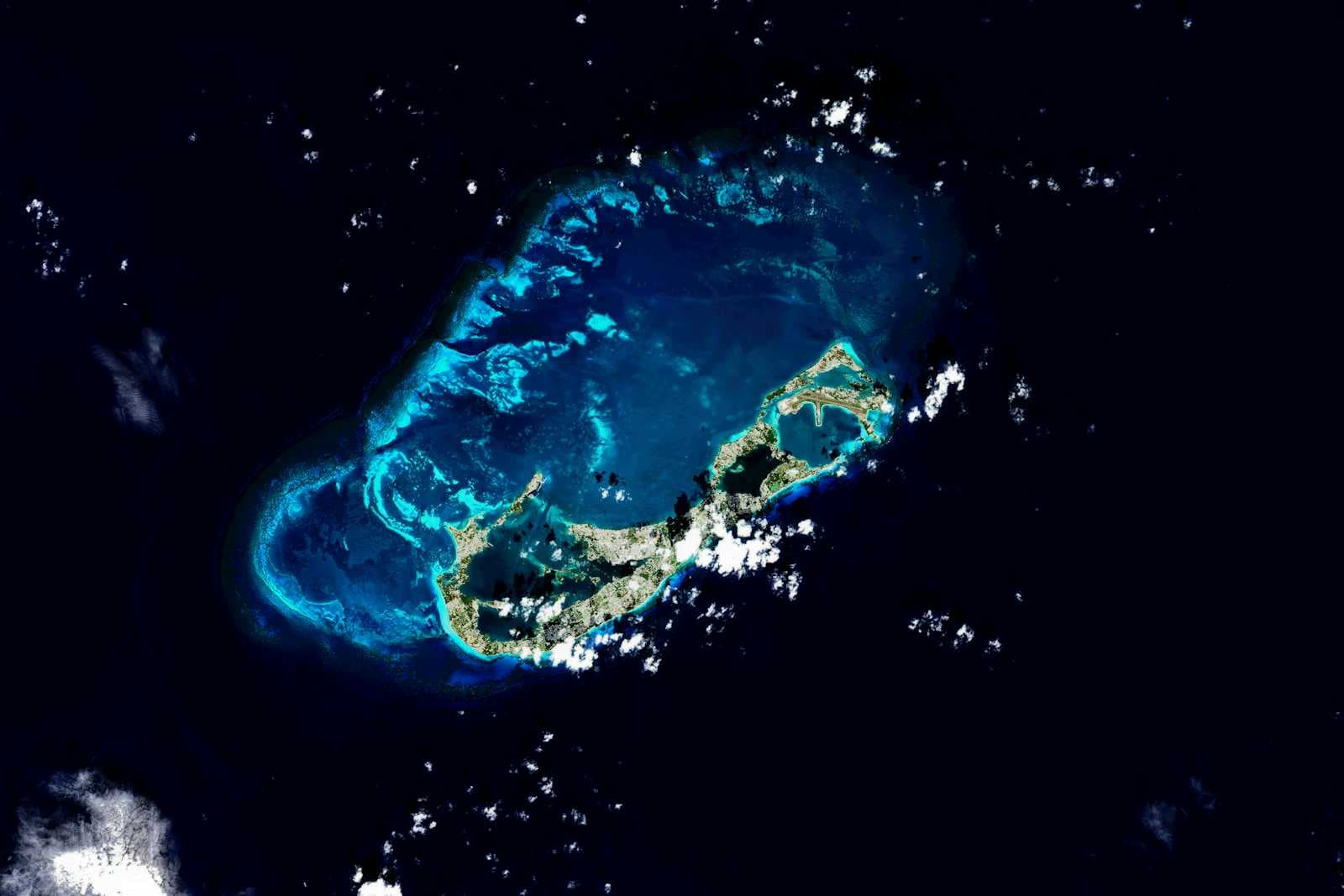
Planetary exploration has entered an era where data volumes have skyrocketed, mission timelines have become more ambitious, and the demand for rapid, accurate scientific insights has intensified. Whether it is the Moon, Mars, Venus, or distant icy moons, modern space missions rely heavily on satellite imagery for mapping, terrain analysis, monitoring planetary features, and identifying potential sites for research or landing. However, the traditional workflow for satellite image analysis is slow, manual, and error-prone—often leading to delayed mission decisions, missed anomalies, and significant scientific opportunity costs.
Presear Softwares Pvt. Ltd. is uniquely positioned to address these challenges through its advanced AI-driven geospatial analytics solutions, real-time image processing pipelines, and automated planetary mapping frameworks. By integrating cutting-edge machine learning, computer vision, and cloud-scaled data engineering, Presear enables space agencies and research teams to accelerate planetary mapping workflows with unprecedented speed, accuracy, and consistency.
This article explores how Presear’s technology transforms the domain of Satellite Image Analysis for Planetary Mapping, the pain points solved, the beneficiaries, and how the company’s innovation aligns with global scientific and commercial space exploration missions.
Planetary mapping involves stitching, analyzing, and interpreting terabytes of satellite images captured by orbiters, rovers, and landers. Traditionally, this process has depended on manual inspection and semi-automated GIS techniques. While these methods offer precision, they come with major limitations:
Planetary missions capture thousands of high-resolution images daily. Manual processing often takes weeks or months.
Human analysts may overlook small but mission-critical features such as:
Volcanic vents
Water-formed channels
Subsurface ice indicators
Unusual rock formations
Entry or crash site traces
Missing such anomalies can affect scientific conclusions, mission safety, and resource planning.
Different teams produce different levels of accuracy and annotation standards, leading to inconsistent planetary maps.
Time-intensive workflows require large research teams, inflating project budgets.
In fast-moving missions—such as lunar landing attempts—real-time decision-making becomes impossible with manual workflows.
Presear Softwares Pvt. Ltd. solves all these challenges using intelligent automation.
For missions like Artemis, Mars Reconnaissance Orbiter (MRO), and Europa Clipper, real-time surface insights are crucial.
Presear’s solutions support missions such as:
Chandrayaan lunar mapping
Mangalyaan Mars mission
Upcoming Venus and human-spaceflight programs
Commercial missions need rapid analysis of planetary terrains for:
Starship landing site selection
ISRU (In-Situ Resource Utilization) studies
Mars colonization planning
Universities, space research labs, and observatories require scalable mapping tools for continuous research.
Lunar mining, asteroid exploration, and satellite analytics companies benefit from automated geospatial intelligence.
Presear leverages its strong software engineering, geospatial intelligence expertise, and next-generation AI architecture to create an ecosystem that fully automates end-to-end satellite image analysis.
Presear builds fully automated pipelines that transform raw satellite data into structured, usable maps.
Removes atmospheric noise, low-light distortions, and transmission artifacts.
Combines thousands of overlapping images into seamless, accurately aligned planetary surface maps.
Enhances image resolution up to 4× using deep learning.
Creates:
DEMs (Digital Elevation Models)
3D surface models
Slope and gradient maps
These are vital for landing site analysis and rover navigation.
Presear’s AI models detect planetary features with accuracy superior to manual tagging.
Craters
Lava flows & volcanic structures
River-like channels
Ridge lines and fault zones
Ice deposits
Sand dunes
Frozen oceans
Meteorite impact basins
Thermal anomalies
The system continuously learns from new datasets, ensuring up-to-date planetary intelligence.
Presear’s AI platform can evaluate potential landing zones based on:
Surface smoothness
Rock density
Slope angles
Shadow mapping
Radiation exposure estimation
Proximity to scientific targets
This drastically reduces decision-making time for lunar and Mars missions.
One of the biggest advantages of AI is its ability to detect features that humans may not expect.
Presear’s anomaly detection models flag:
Unknown geological structures
Water-based erosion traces
Subsurface ice signatures
Magnetic anomalies
Crash sites or debris
Unusual thermal footprints
These insights often lead to discoveries that redefine planetary science.
Planetary missions produce petabytes of data. Presear creates robust data engineering solutions that include:
Distributed processing
Parallel image rendering
High-speed data querying
Metadata tagging
Long-term archival systems
This ensures that research teams can access planetary datasets instantly.
Presear designs modern, intuitive dashboards where scientists can:
View real-time satellite imagery
Generate 3D terrain models
Annotate features
Export GIS layers
Run automated AI analysis
Simulate rover paths
Overlay multispectral and hyperspectral data
This dramatically improves collaboration and decision-making for mission teams worldwide.
Presear’s AI models process spectral data to detect material compositions, enabling:
Identification of minerals
Subsurface water detection
Soil chemistry analysis
Thermal mapping
Radiation mapping
This supports ISRO, NASA, and private companies in understanding planetary environments more deeply.
Manual workflows that once took months can now be completed in hours.
Accelerates mission timelines
Improves launch readiness
Enables rapid scientific experimentation
AI identifies hazardous zones invisible to human analysts.
Reduced mission risk
Higher success rate
Increased spacecraft longevity
AI eliminates human biases and inconsistencies.
High-precision planetary maps
Reliable geospatial datasets
Improved scientific discoveries
Automation significantly lowers manpower and operational overhead.
Saves millions in mission costs
Enables more missions within the same budget
Space mining, lunar tourism, and private colonization efforts all rely on advanced mapping.
Presear’s solutions open new avenues for private space companies.
Presear builds domain-specific models trained on planetary datasets.
From data pipelines to dashboards, Presear offers a complete ecosystem.
Works for small research teams and major space agencies alike.
Supports NASA, ISRO, ESA, SpaceX, and research institutions.
Presear continuously adapts to new mission requirements and data formats.
The future of planetary exploration depends on speed, accuracy, automation, and intelligent interpretation of satellite data. Manual mapping workflows are no longer sufficient to keep up with the scale and complexity of modern missions. Presear Softwares Pvt. Ltd. is bridging this gap by providing AI-powered, end-to-end geospatial intelligence systems that automate satellite image analysis and transform raw data into actionable planetary insights.
With its cutting-edge technology, Presear empowers NASA, ISRO, SpaceX, and planetary science teams worldwide to explore faster, discover more, and make mission-critical decisions with confidence.