Predictive Maintenance for Spacecraft Systems — A Presear Softwares PVT LTD Use Case
I
Head (AI Cloud Infrastructure), Presear Softwares PVT LTD
Search for a command to run...
Head (AI Cloud Infrastructure), Presear Softwares PVT LTD
No comments yet. Be the first to comment.
Explore the forefront of AI innovation with Presear Softwares' AI Series, delving into machine learning for automation and neural networks for predictive analytics, unlocking AI's transformative potential across industries.
How Presear Softwares Empowered the National Institute of Wind Energy with Intelligent Asset Tracking

An ICSSR Project Implementation by Presear Softwares

A Hybrid Architecture for Voice-Driven Molecular Simulation and Quantum Chemistry Experiments

How PresearVisionXTrans™ Can Secure Large Gatherings like Holi

How Presear Engineered a Burst-Resilient Government Recruitment Portal using AI-Ready Scalable Architecture
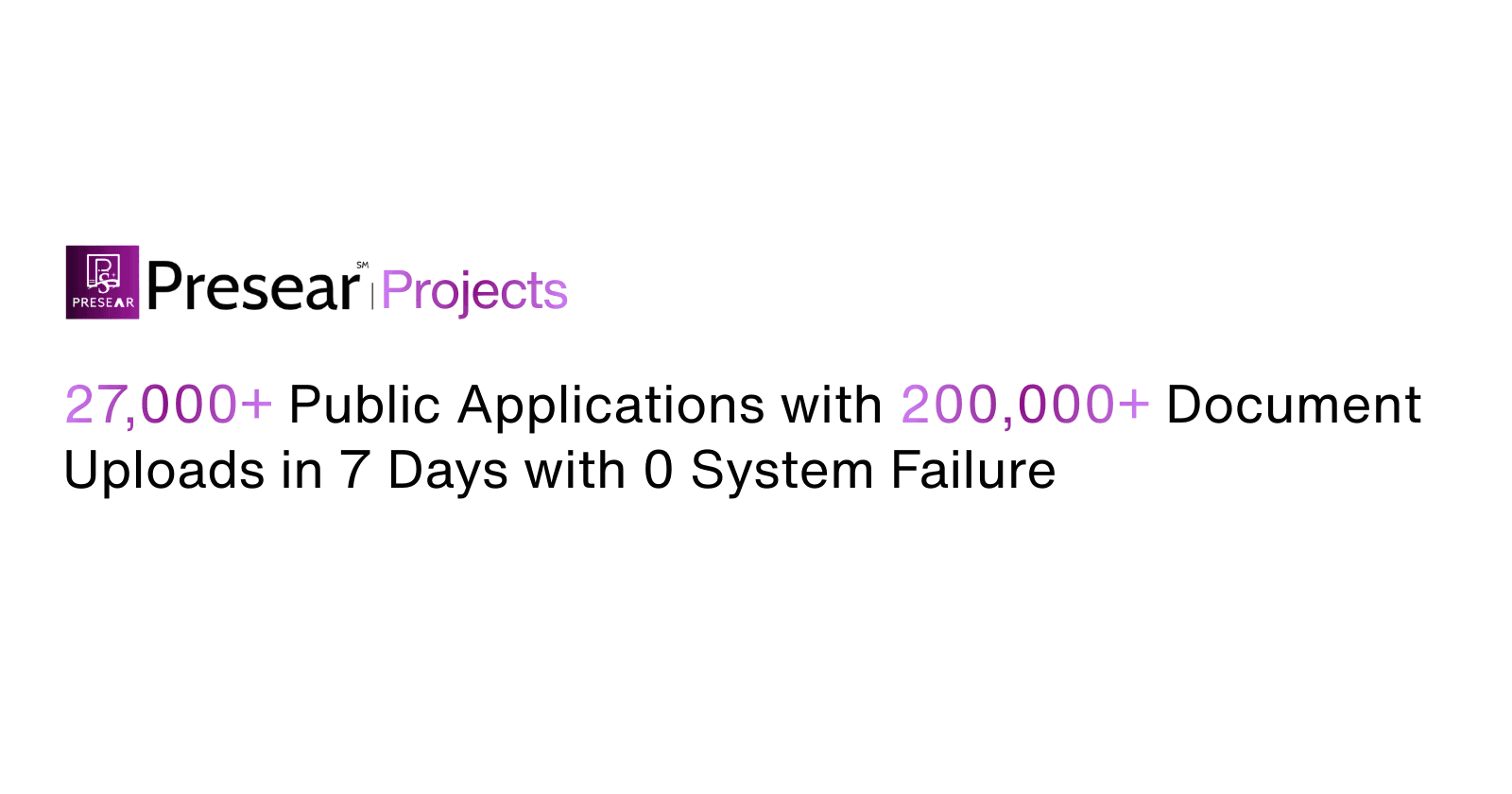
Space missions demand reliability. A single unpredicted failure in a satellite bus, propulsion subsystem, power system, or thermal control loop can cascade into mission degradation or complete loss. For satellite operators, space agencies, and private space companies, minimizing the risk and cost of in-orbit failures is a top priority. Presear Softwares PVT LTD — a trusted engineering and AI partner — offers an integrated predictive maintenance (PdM) platform tailored for spacecraft systems that turns telemetry and test data into actionable foresight. This article explains the problem, the Presear solution approach, the technology stack, business benefits, implementation roadmap, and an illustrative example demonstrating how PdM can transform spacecraft operations.
Spacecraft operate in unforgiving environments: vacuum, radiation, extreme temperatures, and limited opportunities for physical intervention. Traditional maintenance strategies used in terrestrial systems — scheduled servicing or reactive repairs — are either impossible or extremely expensive in space. The key challenges include:
Sparse observability: Limited telemetry bandwidth forces teams to prioritize which signals to return, which can obscure early signs of degradation.
Complex failure modes: Many subsystems (e.g., reaction wheels, propulsion, power electronics) have non-linear wear and failure patterns influenced by mission profile and environment.
High consequence of failures: Failures can result in partial or total loss of mission objectives and billions in lost value.
Lifecycle and aging effects: Long-duration missions require understanding component aging under unique stressors that differ from lab tests.
Predictive maintenance addresses these issues by shifting the maintenance paradigm from reactive or calendar-based to condition-based — using data and models to forecast faults before they become mission-critical.
Presear Softwares PVT LTD provides a complete PdM offering for space systems combining domain expertise, advanced analytics, and secure cloud/edge engineering. The solution comprises:
Telemetry ingestion and normalization: Collects and normalizes telemetry from spacecraft buses, payloads, and ground tests using a highly configurable pipeline that supports different telemetry schemas and bandwidth constraints.
Feature engineering and health metrics: Extracts meaningful features (e.g., vibration harmonics, temperature gradients, bus voltage fluctuation statistics, reaction wheel friction trends) and computes composite health indices tailored to subsystem physics.
Machine learning models and physics-informed analytics: Uses hybrid modeling — combining physics-based models (digital twins) with statistical and ML models (time-series forecasting, anomaly detection, survival analysis) — to estimate remaining useful life (RUL) and predict failure probabilities.
Anomaly detection and explainability: Detects deviations from expected behavior using unsupervised and semi-supervised methods, and provides explainable alerts that reference which signals and patterns triggered the prediction.
Decision support and maintenance planning: Converts predictions into prioritized actions — for example, commanding mode changes, load shedding, safe-mode triggers, or scheduling ground-based diagnostics — alongside estimated certainty and suggested operations plans.
Secure deployment: Supports both ground/cloud analytics and onboard/edge inference for latency-sensitive use cases, with security-by-design for command-and-control integration.
Adaptive sampling: To respect limited downlink, Presear implements adaptive telemetry sampling and prioritization based on current and predicted health states.
Loss-tolerant ingestion: Robust handling for out-of-order or dropped packets; interpolation and uncertainty quantification when telemetry is sparse.
Domain-specific transforms: FFTs for reaction wheel vibration, spectral energy for power electronics, thermal gradient analysis.
Contextual features: Load profiles, mission phase, attitude maneuvers, and space weather indices (e.g., geomagnetic activity) are incorporated as covariates.
Hybrid digital twins: Lightweight physics models simulate expected behavior; deviation residuals feed ML detectors.
Time-series forecasting: LSTM/Transformer-style models or classical ARIMA when data is limited, tuned for small-sample regimes.
Survival and RUL models: Cox-type survival models and probabilistic RUL estimates that output confidence intervals.
Unsupervised anomaly detection: Autoencoders, isolation forests, and change-point detectors for unknown failure modes.
Attribution: Shapley-inspired attributions or gradient-based attributions show which telemetry drove a prediction.
Confidence scoring: Bayesian approaches provide calibrated probabilities so operators can weight the confidence of suggested actions.
Onboard inference: Compact, quantized models run on flight-qualified processors for immediate, safety-critical decisioning.
Ground analytics: Heavy compute (ensemble training, retraining, digital twin calibration) runs on secure cloud infrastructure and produces updated models for uploads.
Reduced risk of catastrophic failures: Early detection of anomalies provides time for mitigation — e.g., staging a safe-mode, reducing load, or reconfiguring redundant systems.
Extended mission life: By avoiding abrupt failures and optimizing operating points, PdM often extends satellite service life and revenue-generating periods.
Lower operational cost: Fewer emergency interventions and more efficient use of resources (e.g., fuel, power cycles) reduce lifetime cost of ownership.
Improved decision confidence: Explainable alerts let mission control make informed trade-offs between risk and mission performance.
Faster anomaly resolution: Prioritized diagnostics and root-cause suggestions lower mean time to diagnose (MTTD) and mean time to recovery (MTTR).
Data-driven design feedback: Insights from in-orbit degradation inform component selection and design improvements for future spacecraft.
Inventory telemetry sources and ground test data.
Prioritize subsystems with the highest risk/value.
Establish success metrics (e.g., reduction in unplanned downtime, RUL forecast accuracy).
Ingest historic telemetry and instrument ground-test data.
Build initial hybrid models for 1–2 critical subsystems (e.g., reaction wheels, battery management).
Run backtests and simulated war-room exercises to validate predictions.
Optimize models for flight hardware and integrate inference agents.
Implement secure update mechanisms for model uplinks.
Train operator teams on decision dashboards and explainability outputs.
Expand to additional subsystems and spacecraft.
Implement automated retraining pipelines using newly collected in-flight data.
Establish a mission feedback loop to refine digital twins and priors.
Presear manages this end-to-end process, tailoring the pipeline to the operator’s communication constraints, regulatory requirements, and mission profile.
Imagine a GEO communications satellite experiencing subtle increases in reaction wheel vibration and a slow rise in battery internal resistance. Traditionally these signals might go unnoticed until a wheel trips or battery capacity degrades beyond usable margins. Presear’s PdM platform:
Data ingestion: Collects wheel speed, vibration spectra, torque commands, battery voltage, temperature, and cycle counts.
Feature extraction: Flags consistent increases in specific vibration harmonics and correlates them with wheel torque transients during station-keeping burns.
Hybrid modeling: A digital twin predicts expected vibration signatures; residuals feed an LSTM forecasting rising friction and a survival model estimating RUL for the wheel bearings.
Actionable alert: The system issues an explainable alert: “Elevated 3rd-harmonic vibration correlated with torque spikes; estimated bearing RUL: 6–10 months (70% CI). Recommended: shift station-keeping workload to redundant wheel and schedule a reduction in momentum desaturation torque profile to reduce stress.”
Outcome: Operators redistribute control torques, mitigating stress on the degrading wheel. Secondary battery diagnostics reveal early electrolyte changes; power loads are rebalanced to avoid deep discharges, preserving battery health. The satellite continues operations while a planned mitigation occurs during the next maintenance window.
This proactive sequence prevented abrupt wheel failure and preserved payload availability, directly protecting revenue.
Limited labeled failure data: Failures are rare. Presear uses transfer learning, synthetic anomaly injection, and physics-based simulation to train robust detectors.
Telemetry scarcity: Adaptive sampling and onboard preprocessing compress the signal while prioritizing safety-critical features.
Model trust: Explainability, conservative thresholds, and human-in-the-loop decisioning ensure operators keep control.
Cybersecurity and safety certification: Presear follows secure development lifecycles, performs rigorous validation, and supports documentation for regulatory audits.
Presear brings a blend of aerospace domain knowledge, machine learning expertise, and systems engineering rigor. Their approach is pragmatic and risk-aware: favoring hybrid physics-ML models, delivering explainable outputs, and engineering solutions for both onboard and ground environments. For satellite operators and space agencies looking to reduce mission risk, extend asset life, and extract more value from telemetry, Presear offers an industrialized pathway to reliable predictive maintenance.
Predictive maintenance is not a luxury — it’s a mission enabler. For spacecraft, where repairs are often impossible and failures are costly, turning telemetry into foresight is essential. Presear Softwares PVT LTD’s end-to-end PdM solution equips operators with the ability to predict failures, make better operational choices, and keep missions on track. From adaptive telemetry pipelines and hybrid modeling to explainable alerts and secure edge deployments, the Presear approach minimizes surprises and maximizes mission resilience. In the high-stakes domain of space, that difference can be the difference between mission success and mission loss.