

LLM Summarization of Space Mission Reports: A Strategic Use Case for Presear Softwares Pvt. Ltd.
I
Head (AI Cloud Infrastructure), Presear Softwares PVT LTD
Search for a command to run...
Head (AI Cloud Infrastructure), Presear Softwares PVT LTD
No comments yet. Be the first to comment.
Explore the forefront of AI innovation with Presear Softwares' AI Series, delving into machine learning for automation and neural networks for predictive analytics, unlocking AI's transformative potential across industries.
How Presear Softwares Empowered the National Institute of Wind Energy with Intelligent Asset Tracking
An ICSSR Project Implementation by Presear Softwares

A Hybrid Architecture for Voice-Driven Molecular Simulation and Quantum Chemistry Experiments

How PresearVisionXTrans™ Can Secure Large Gatherings like Holi

How Presear Engineered a Burst-Resilient Government Recruitment Portal using AI-Ready Scalable Architecture
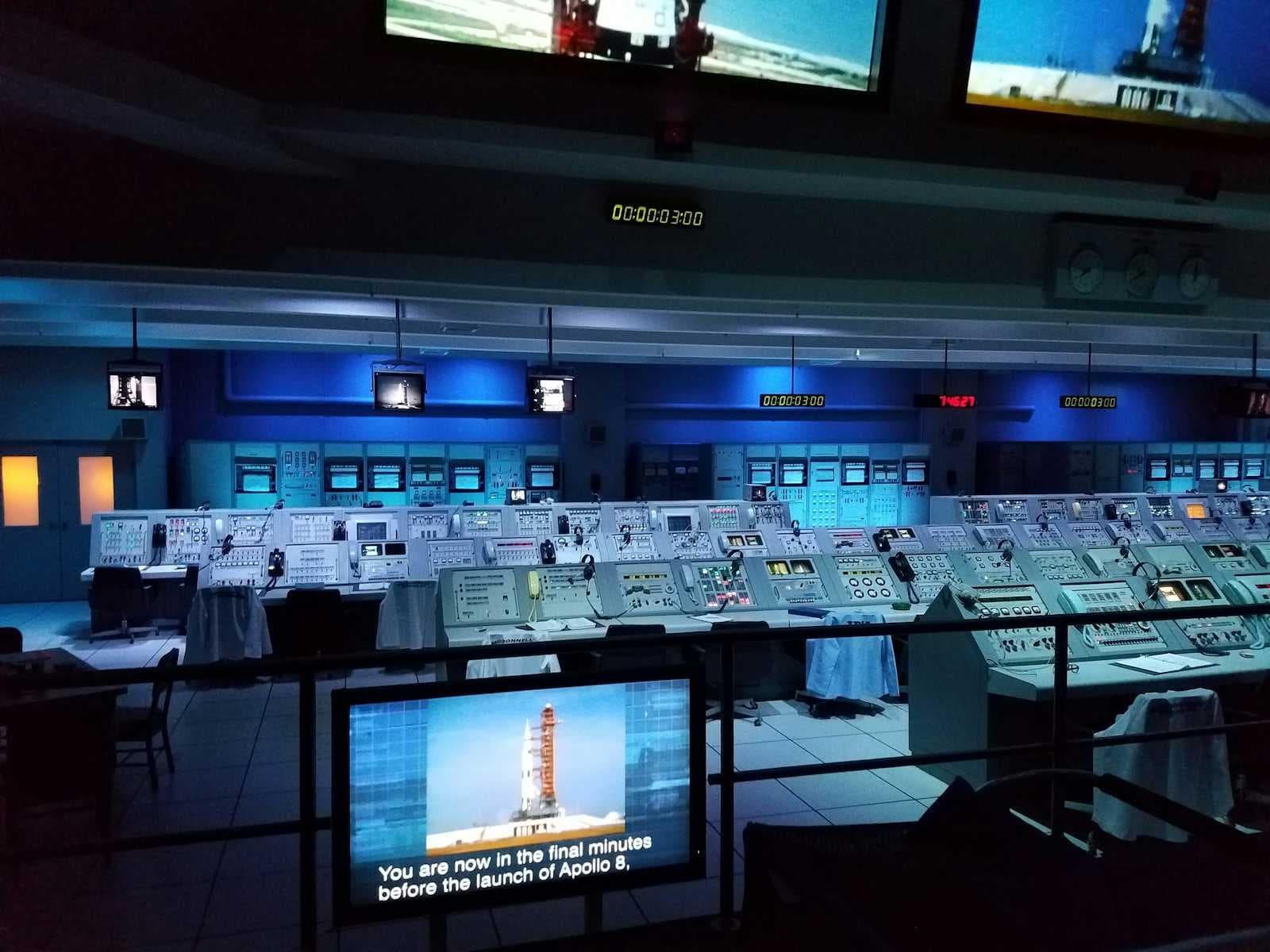
Space exploration has entered an era defined by unprecedented data generation. Every satellite launch, rover movement, orbital maneuver, or payload experiment produces gigabytes of mission logs, telemetry data, error codes, navigation details, subsystem health reports, and scientific observations. While this abundance of information ensures greater visibility and precision, it also introduces a critical challenge: space mission engineers and analysts spend enormous time reading through lengthy mission reports before making decisions.
This bottleneck often results in delayed troubleshooting, slower research cycles, and increased operational costs.
Presear Softwares Pvt. Ltd., through its advanced AI capabilities, offers a powerful solution—Large Language Model (LLM)-powered summarization of space mission reports. This capability transforms dense technical documents into clear, concise, and actionable summaries, empowering aerospace teams to make faster, more informed decisions.
Space mission documentation is inherently complex. A single mission may generate:
Telemetry logs running into thousands of lines
Health and status reports of propulsion, power systems, and communication units
Event timelines from launch to landing
Navigation and orbital adjustment records
Scientific experiment logs from onboard instruments
System alerts, anomaly descriptions, and resolution attempts
Mission engineers must comb through these logs meticulously to:
Detect anomalies
Diagnose system failures
Validate mission milestones
Optimize resources
Prepare research papers and reports
This manual review often consumes hours or even days, causing bottlenecks in mission operations and research workflows.
Presear Softwares Pvt. Ltd. brings cutting-edge AI and LLM technologies to the heart of space analytics. The company’s LLM-driven summarization system can rapidly process thousands of pages of mission documentation and convert them into:
Executive summaries
Technical briefs
System-wise status reports
Anomaly-specific extracts
Decision-focused summaries
Chronological mission narratives
This enables engineering teams to extract insights within minutes instead of hours.
Telemetry is one of the most data-heavy components of any mission. Presear’s LLM models:
Identify patterns
Highlight deviations
Summarize subsystem performance
Flag unusual sensor readings
This ensures faster anomaly detection and operational clarity.
Aerospace engineers often need summaries focused on:
Propulsion
Thermal system performance
Power supply and battery cycles
Reaction wheels and attitude control
Communication bandwidth and signal quality
Payload functionality
Presear’s LLMs can segment reports based on subsystem data and generate highly structured summaries for each one.
Instead of manually piecing together events, the LLM automatically reconstructs the mission timeline, highlighting:
Key operations
Orbital adjustments
Critical anomalies
Communication blackouts
Successful milestones
This makes mission debriefing significantly faster.
LLMs are trained to understand the context behind each anomaly code and can provide:
A simplified explanation of the anomaly
Probable cause
Historical recurrence (if data available)
Immediate action recommendations
This reduces cognitive load on engineers and improves operational efficiency.
They can instantly understand mission status without reading bulky logs.
They can produce faster reports and advisories for mission control and research teams.
They gain access to clean summaries useful for scientific publications, presentations, and evaluation.
LLM summaries accelerate decision-making, reduce human error, and optimize overall mission management.
Presear’s system ingests data from multiple formats:
PDF mission reports
TXT telemetry logs
CSV subsystem data
Telemetry databases
Event log files
Communication logs
Experimental output reports
Before LLM processing, the system:
Cleans noise
Normalizes terminologies
Removes redundant telemetry cycles
Structures timeline tags
Maps technical abbreviations to standard definitions
This ensures high-quality AI-generated summaries.
Customized LLMs trained on aerospace datasets generate:
Short summaries
Long-form summaries
Tabular breakdowns
Critical insights
Risk reports
Actionable recommendations
Presear allows summaries tailored to different audiences:
Executive Summary: High-level mission overview for leadership.
Engineer Summary: Detailed technical explanation of subsystems and anomalies.
Analytical Summary: Trend-focused insights for analysts.
Compliance Summary: Documentation for audits and regulatory checks.
Presear integrates LLM summarization with:
Mission control dashboards
Internal cloud data networks
Engineering tools
Research documentation platforms
This allows automated, real-time summary generation as soon as new logs are produced.
Presear trains models specifically on aerospace datasets, ensuring:
Accurate terminology handling
Context-aware interpretation
Meaningful summaries without distortion
Space mission data is extremely sensitive. Presear ensures:
On-premise deployment options
Encrypted processing
Zero data leakage
Strict access controls
Whether summarizing logs from:
A single satellite
A fleet of Earth-observation satellites
A Mars rover mission
A space station experiment
Presear’s system scales efficiently with mission size.
Every mission is unique. Presear offers:
Custom summary formats
Keyword-focused extractions
Subsystem-based templates
AI fine-tuning on past mission logs
By reducing the manual reading workload, organizations can reallocate engineering time to innovation and problem-solving.
Imagine a mission where a deep-space probe sends daily telemetry logs totaling 200+ MB. Engineers normally spend 3–4 hours analyzing these logs.
With Presear’s LLM summarizer:
Complete telemetry summary within minutes
Subsystem-wise breakdown instantly available
Quick anomaly detection
Timeline reconstruction without manual effort
A clean report for daily briefings generated automatically
Over a year, this saves thousands of engineering hours.
Decision-making becomes lightning-fast, ensuring timely corrective actions.
Quick detection of anomalies prevents mission-critical failures.
Scientists receive clean datasets and summaries for analysis, improving research quality.
Lower workforce hours, faster insights, and reduced error rates collectively cut mission costs.
Summaries can be shared across teams, improving communication and understanding.
As the world moves toward more ambitious space missions—Moon bases, Mars exploration, deep-space probes, and commercial space travel—data will only grow more complex and voluminous. Presear Softwares Pvt. Ltd. recognizes this emerging challenge and provides an actionable AI-driven solution.
Through LLM-powered summarization, Presear empowers:
Aerospace engineers
Mission controllers
Space analysts
Research scientists
to navigate mission complexity with speed, accuracy, and confidence.
This use case highlights how AI, when engineered with precision and domain awareness, becomes a strategic asset for the future of space exploration. Presear Softwares Pvt. Ltd. stands at the forefront of this transformation—helping organizations unlock insights faster, reduce operational friction, and push the boundaries of space innovation.