LLM Summarization of Defence Manuals: A Strategic Use Case for Presear Softwares Pvt. Ltd.
I
Head (AI Cloud Infrastructure), Presear Softwares PVT LTD
Search for a command to run...
Head (AI Cloud Infrastructure), Presear Softwares PVT LTD
No comments yet. Be the first to comment.
Explore the forefront of AI innovation with Presear Softwares' AI Series, delving into machine learning for automation and neural networks for predictive analytics, unlocking AI's transformative potential across industries.
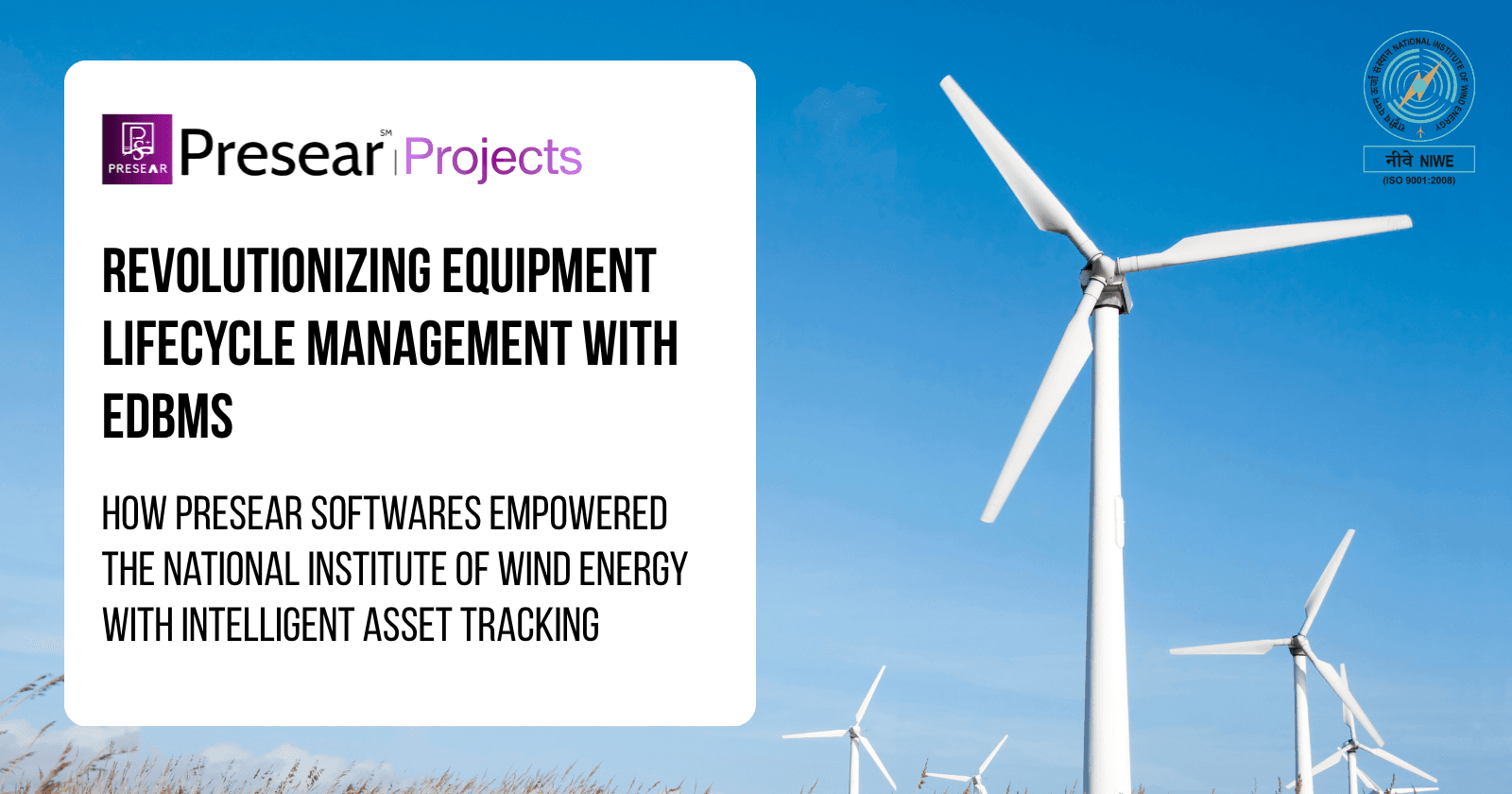
How Presear Softwares Empowered the National Institute of Wind Energy with Intelligent Asset Tracking
An ICSSR Project Implementation by Presear Softwares

A Hybrid Architecture for Voice-Driven Molecular Simulation and Quantum Chemistry Experiments

How PresearVisionXTrans™ Can Secure Large Gatherings like Holi

How Presear Engineered a Burst-Resilient Government Recruitment Portal using AI-Ready Scalable Architecture
In the rapidly evolving defence and aerospace sectors, efficiency, accuracy, and rapid decision-making are essential. Defence engineers, research specialists, aerospace technicians, and mission support analysts frequently rely on extensive technical documentation—often thousands of pages long—to perform their roles effectively. These manuals contain crucial operational details, troubleshooting procedures, system configurations, safety guidelines, and mission-critical instructions. However, manually navigating such voluminous content is a time-consuming and cognitively demanding task. This is a core challenge across various Defence R&D labs, aerospace manufacturing units, and mission support ecosystems.
Presear Softwares Pvt. Ltd., with its expertise in Artificial Intelligence, Machine Learning, and enterprise-grade automation systems, addresses this challenge through LLM-powered summarization systems tailored specifically for defence documentation. This transformative use case demonstrates how advanced Large Language Models (LLMs) can significantly enhance operational efficiency, reduce dependency on manual scanning, and accelerate mission-readiness.
Defence and aerospace industries are some of the most documentation-intensive sectors in the world. Technical manuals provided for aircraft, missile systems, radars, avionics modules, communication suites, and ground support equipment often extend into thousands of pages. These documents are regularly updated, requiring engineers and technicians to repeatedly wade through dense content.
Engineers may spend 4–8 hours a week going through manuals to find relevant sections for maintenance, repair, or operational planning. This slows down project timelines and hinders productivity.
Critical information hidden deep within technical jargon can be skipped or misinterpreted, potentially leading to operational errors.
In mission-critical scenarios, quick access to the right information can determine whether a mission succeeds or fails. Manual lookup becomes impractical under tight timelines.
Defence R&D labs evaluating new technologies must compare large sets of technical documents. Without automated summarization, this becomes an enormous challenge.
Presear Softwares Pvt. Ltd. proposes a sophisticated solution using custom-trained Large Language Models (LLMs) capable of reading, parsing, and summarizing complex defence manuals. Unlike generic summarization tools, Presear’s engine is specially designed to handle:
Engineering terminology
Defence-grade documentation
Schematic explanations
Multi-format input (PDF, images, scanned manuals)
Multi-level summaries for different user types
The system is built with high accuracy, strong data privacy, and on-premise deployment options, ensuring that sensitive and classified data never leaves the organization’s secure environment.
The system generates summaries for each chapter, including purpose, key components, operational steps, diagrams interpretation, and safety highlights.
Engineers can ask questions like:
“How to troubleshoot hydraulic actuator failure in Mark-II fighter jet?”
“What is the safety protocol for radar antenna maintenance?”
The LLM immediately retrieves and summarizes the relevant section.
Instead of generic text compression, the model understands the context of defence systems, such as:
avionics
propulsion
guided weapon technology
sensor fusion systems
battlefield communication networks
Using OCR and secure processing, the system works even with decades-old manuals available only as scanned documents.
Different users receive summaries tailored to their roles:
Technicians: Step-by-step instructions
Engineers: Technical analysis + design details
Mission Staff: High-level operational summaries
Deployed on secure local servers with:
Data encryption
Zero external API dependency
Air-gapped environment compatibility
Adherence to defence cybersecurity protocols
The manual (PDF/scan/image) is uploaded through a secure portal.
OCR automatically extracts text and technical terms, maintaining layout integrity.
The system maps concepts, components, and technical instructions using vector embeddings and knowledge graphs.
The LLM generates summaries, highlights, and Q&A capabilities.
Engineers access summaries via:
Web dashboard
Mobile app
Workflow integration with existing defence systems
The system improves over time as more manuals and queries are processed.
Presear’s LLM-based summarization system offers significant advantages that directly contribute to operational excellence.
Engineers no longer need to manually browse hundreds of pages. Summaries deliver insights in seconds, allowing teams to focus on execution rather than document search.
Mission support teams can quickly gather technical information required for upgrades, emergency repairs, and mission planning.
The LLM reduces human error by identifying the exact procedures and safety steps mentioned in the manuals.
During emergencies—such as equipment malfunction or mission downtime—the AI engine delivers precise, actionable guidance instantly.
Research teams comparing multiple systems or evaluating new technologies can use summaries to accelerate analysis and documentation review.
New engineers and technicians get consistent and accurate training material through summaries, reducing dependency on senior staff.
Time is one of the biggest costs in defence R&D and operations. By automating document comprehension, Presear saves thousands of person-hours annually.
Aircraft maintenance manuals often exceed 5,000 pages. Presear’s LLM can summarize sections such as:
engine diagnostics
landing gear troubleshooting
avionics installation instructions
This drastically reduces the time required to prepare for servicing operations.
Engineers integrating missile systems with launch platforms must study intricate wiring diagrams and protocol sequences. Summaries help pinpoint the exact steps for testing, calibration, and alignment.
Documentation for new prototype systems includes design notes, compatibility guidelines, and test results. The LLM accelerates research activities.
Real-time summaries improve readiness during:
system failures
weather complications
emergency repairs
mission reconfiguration
Older systems often rely on outdated, handwritten, or scanned manuals. Presear’s AI engine extracts and digitizes these into structured, searchable content.
Presear stands out due to its:
Presear builds systems using cutting-edge AI models tuned for high accuracy and domain-specific comprehension.
From secure deployments to custom NLP models trained on defence terminology, Presear tailors solutions end-to-end.
On-premise installation ensures full control over sensitive material.
The summarization engine can process millions of pages, making it suitable for large defence organizations.
Presear’s track record in building enterprise-grade, AI-driven automation solutions makes it a trusted technological partner.
LLM-powered summarization represents a milestone in the digital transformation of defence workflows. With technology evolving rapidly, future versions of Presear’s system could include:
Voice-based query systems for field engineers
Integration with AR-based maintenance tools
Predictive failure detection from manual insights
Multi-lingual summaries for international collaborations
The vision is clear: a defence ecosystem where information is instantly accessible, contextual, and actionable.
The defence sector cannot afford delays, errors, or inefficiencies caused by lengthy manual documentation. Presear Softwares Pvt. Ltd. addresses this critical challenge through its LLM Summarization of Defence Manuals—a powerful AI-driven solution that transforms the way engineers, scientists, and mission teams work.
By reducing manual reading time, improving accuracy, and accelerating decision-making, Presear empowers defence organizations to operate with heightened efficiency and strategic capability. As the world moves toward next-generation warfare technologies, intelligent documentation automation will play a crucial role—and Presear is leading that transformation.