LLM-Powered Customer Support — A Presear Softwares Pvt Ltd Use Case

I
Head (AI Cloud Infrastructure), Presear Softwares PVT LTD
Search for a command to run...
Head (AI Cloud Infrastructure), Presear Softwares PVT LTD
No comments yet. Be the first to comment.
Explore the forefront of AI innovation with Presear Softwares' AI Series, delving into machine learning for automation and neural networks for predictive analytics, unlocking AI's transformative potential across industries.
How Presear Softwares Empowered the National Institute of Wind Energy with Intelligent Asset Tracking

An ICSSR Project Implementation by Presear Softwares
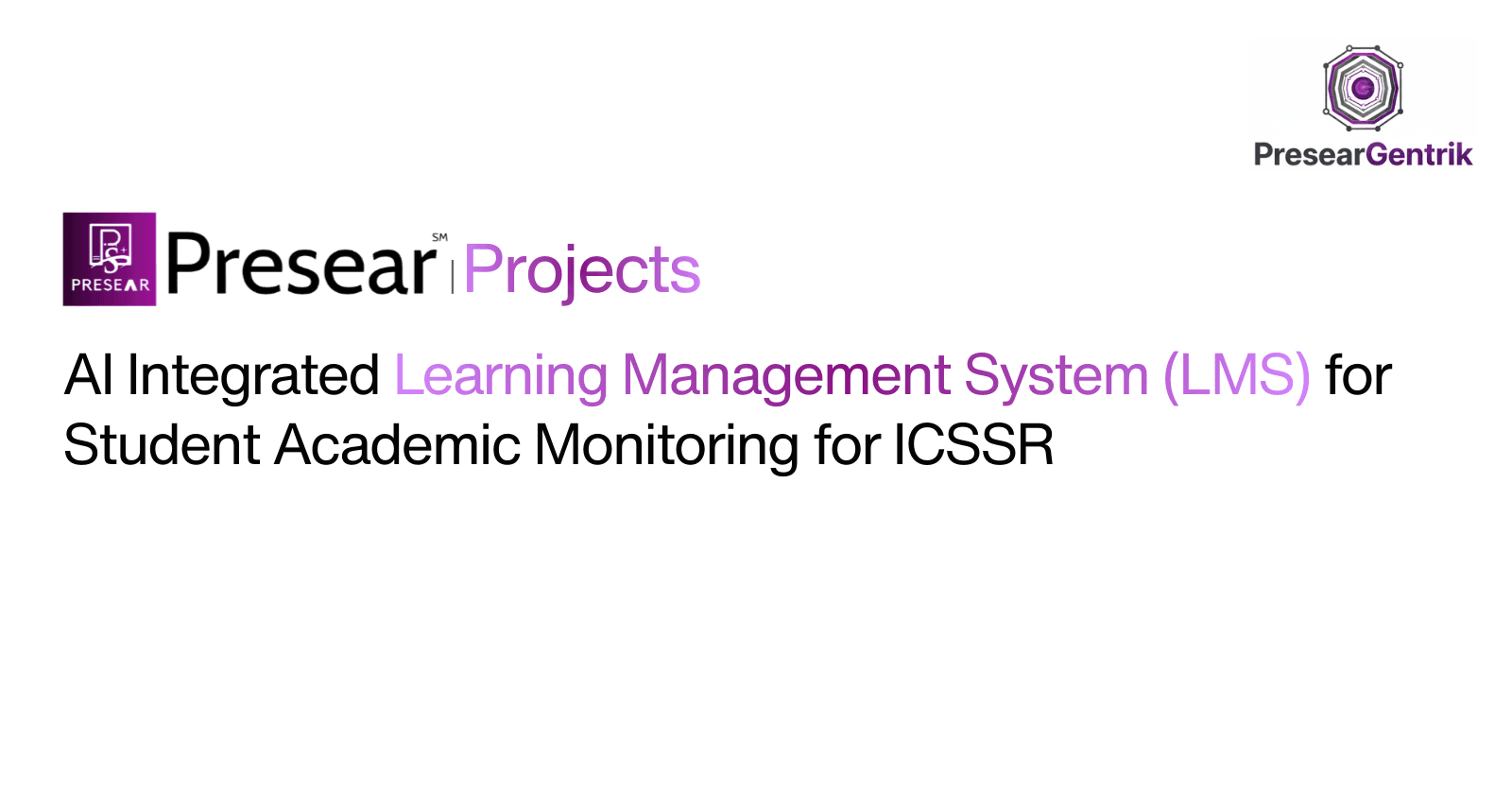
A Hybrid Architecture for Voice-Driven Molecular Simulation and Quantum Chemistry Experiments
How PresearVisionXTrans™ Can Secure Large Gatherings like Holi
How Presear Engineered a Burst-Resilient Government Recruitment Portal using AI-Ready Scalable Architecture
In an era where customers expect near-instant answers and frictionless experiences, support teams that rely on slow, manual processes lose both revenue and loyalty. Presear Softwares Pvt Ltd helps brands turn customer support from a bottleneck into a growth lever by delivering LLM-powered customer support solutions that speed resolution times, lower costs, and create consistent, high-quality customer interactions.
This article explains the problem, outlines Presear’s solution, describes architecture and features, shows measurable benefits (ROI), and gives a practical implementation roadmap for online retailers, marketplaces, and D2C brands.
Modern e-commerce and D2C operations face several recurring support challenges:
High volume, repetitive queries. Order status, returns, refunds, tracking, size charts — 40–70% of queries are repetitive and easily automatable.
Fragmented data. Customer, order, and logistics information often sits in disparate systems (CRM, OMS, WMS, marketplace dashboards), forcing agents to hop between tools.
Long first-response and resolution times. Manual lookups and agent handoffs push up metrics like Average Handle Time (AHT) and First Response Time (FRT).
Inconsistent quality. New agents or seasonal hires produce variable answers, hurting brand voice and increasing escalations.
Cost pressure. Hiring and training agents is expensive; scaling support linearly with volume is not sustainable.
These gaps lead to churn, negative reviews, increased returns, and lost repeat purchases. For marketplaces and retailers, each minute of delay or a wrong answer can directly reduce conversion and lifetime value.
Presear’s LLM-Powered Customer Support product is a plug-and-play stack that combines generative language models with business data connectors and agent orchestration to reduce response time and improve resolution quality.
Key capabilities:
Automated Triage & Self-Service: An LLM identifies query intent and either serves an immediate, conversational answer (e.g., “Your order is out for delivery and should arrive tomorrow by 7 PM”) or routes to the right workflow (refund, replacement, escalation). This reduces common query volume reaching agents.
Contextual Knowledge Retrieval: The LLM retrieves live, authoritative information from connected systems (order databases, trackers, product catalogs, policy documents) so responses are accurate and auditable.
Agent Assist & Drafting: For agent-handled tickets, the system suggests accurate, brand-tone responses, shows relevant customer/order context, suggests next actions, and auto-populates macros—cutting average handle time significantly.
Multi-channel Deployment: Support works over web chat, WhatsApp, email, and marketplace messaging APIs so customers get consistent answers wherever they reach out.
Policy Guardrails & Approvals: Business rules prevent the model from authorizing refunds or sensitive actions without required approvals. All suggested replies can be logged and traced for compliance.
Continuous Learning: Analytics identify gaps in knowledge, new FAQ patterns, and customer sentiment to update knowledge bases and prompts—improving accuracy over time.
Frontend: Chat widgets, WhatsApp integration, email connectors, agent dashboard.
LLM Layer: Presear orchestrates calls to an LLM provider with prompt templates, retrieval augmentation (RAG) using a vector store for company docs and policies.
Connectors: Secure integrations to CRM, OMS, warehouse/tracking APIs, and product databases.
Business Rules Engine: Enforces refund limits, escalation paths, and approval steps.
Analytics & Audit Logs: Tracks resolution times, cost savings, and stores conversation history for compliance.
Admin Console: Manage knowledge base, templates, tone, and escalation rules.
Security and data privacy are core: tokens and keys are stored encrypted, access is role-based, and sensitive responses can be redacted or require agent approval.
Order-aware responses: Pulls order status, items, and shipment tracking into replies without manual searching.
Returns & refunds flow: Automates eligibility checks against return windows, SKU conditions, and policy rules, then drafts refund/label messages.
Inventory & recommendations: When stockouts occur, the bot suggests alternatives and cross-sells based on purchase history and catalog data.
Multi-marketplace support: For sellers on multiple marketplaces, Presear unifies messaging across channels into a single agent queue.
Custom brand tone: All generated text adheres to configurable style guides so replies sound like the brand.
Analytics dashboard: Shows FRT, resolution rate, percentage automated, cost per ticket, and CSAT trends.
Presear’s deployments typically produce improvements in the following metrics:
Automated resolution rate: 30–60% of inbound queries handled without an agent for common intents.
First Response Time: Reduced from hours to under 2 minutes on chat/WhatsApp.
Average Handle Time (AHT): Agent AHT reduced by 30–50% thanks to contextual suggestions and prefilled actions.
Cost per ticket: Significant lowering because fewer agents and less training time are needed; customers often see 20–50% reduction in support operating cost within 6 months.
CSAT & NPS: Faster responses and consistent answers boost CSAT; brands typically report a visible uplift in NPS when response latency and accuracy improve.
Conversion & retention: Faster, accurate support reduces cart abandonment and improves repeat purchase rates (indirect but measurable via A/B tests).
These metrics vary by business type and initial maturity, but the outcome is clear: faster resolutions, lower cost, and higher customer trust.
Discovery (1–2 weeks)
Map current support volume, common intents, system inventory (CRM/OMS/WMS), SLAs, compliance needs, and brand tone.
Pilot (4–6 weeks)
Integrate with one channel (e.g., website chat or WhatsApp), connect order API, configure knowledge base for top 10 intents, and run a controlled pilot covering peak traffic windows.
Scale & Optimize (2–3 months)
Add channels, expand knowledge base, fine-tune prompts and retrieval layers, and onboard agents to the assist dashboard.
Continuous Improvement (ongoing)
Use analytics to refine automations, expand to more intents, and measure CSAT, resolution rate, and cost savings.
Presear supports end-to-end delivery—connector setup, prompt engineering, admin training, and monitoring—so teams can focus on the business, not the plumbing.
Problem: Asha Retail had a 48-hour average response time on WhatsApp and 65% of tickets were order tracking and returns. Seasonal sales spiked volume 4×, creating long queues.
Presear deployment: In 6 weeks Presear added an LLM chat layer and connected to the order database and courier APIs. The bot automated order tracking responses and drafted return labels.
Results (first 3 months):
45% of queries fully automated (order status, tracking).
FRT reduced from 48h to under 5 minutes for messaging channels.
AHT for agent-handled cases down 40%.
CSAT increased 18% and returns processed faster, reducing return-related chargebacks.
Asha used savings to invest in loyalty marketing, boosting repeat purchases.
Start with high-value, low-risk intents: Order tracking, return status, refund eligibility — these are straightforward and yield quick wins.
Human-in-the-loop for sensitive actions: Require agent approval for refunds above thresholds or for manual overrides.
Monitor hallucinations: Use retrieval augmentation and strict citation of source data so the model doesn’t invent order statuses or policies.
Maintain audit trails: Store suggested replies and the data sources used for compliance and dispute resolution.
Continuous retraining: Update the vector store and prompt templates when policies or product catalogs change.
For online retailers, marketplaces, and D2C brands, customer support is both a cost center and a major brand touchpoint. Presear Softwares Pvt Ltd’s LLM-powered customer support solution turns support into a reliable, scalable, and brand-consistent experience. By automating repetitive tasks, enriching agent workflows with live context, and enforcing business rules, Presear reduces costs, shortens resolution times, and improves customer satisfaction — all essential to thriving in a competitive e-commerce landscape.
If you’d like, Presear can help map your current support flows and run a no-commitment pilot to show exactly how much time and cost can be saved in your business.