Abstract

Hybrid Quantum–Classical Transformers represent a practical and impactful midpoint between today’s classical deep-learning systems and future fully-quantum architectures. As the global demand for AI accelerates, the computational cost, energy footprint, and memory requirements of Transformer models continue to escalate. Meanwhile, quantum computing has shown early promise in enhancing specific operations such as feature mapping, similarity evaluation, and high-dimensional pattern extraction. However, full-scale Quantum Transformers remain infeasible due to qubit limitations, noise, and data-encoding bottlenecks. Hybrid models bridge this gap by integrating parameterised quantum circuits and quantum kernels into selected stages of the Transformer pipeline, particularly embeddings, attention scoring, and feed-forward transformations, while retaining classical layers for scale and stability. This research blog from Presear Softwares examines the present capabilities of hybrid architectures, identifies realistic implementation pathways using contemporary platforms such as Qiskit, PennyLane, and TensorFlow Quantum, and evaluates emerging benchmarks from the quantum-AI community. We highlight business-ready applications across language understanding, scientific modelling, finance, and industrial vision, while outlining the critical research gaps that must be addressed for broader adoption. The insights presented here aim to guide organizations toward early, strategic engagement with quantum-accelerated AI, positioning them for the coming generation of computational breakthroughs.
Introduction
Transformer architectures have become the foundational engine behind modern artificial intelligence, powering large language models, multimodal systems, and high-performance vision models. Their ability to capture long-range dependencies and process massive contextual information has enabled unprecedented progress across industries, from language understanding and translation to drug discovery and complex simulations. However, this advancement comes at a growing cost. Transformer training scales quadratically with sequence length, demands enormous computational resources, and consumes significant energy. As organisations push toward larger and more specialised AI systems, classical hardware faces limits in memory bandwidth, parallelisation, and energy efficiency.
In parallel, quantum computing has matured from theoretical curiosity to an emerging computational paradigm, offering fundamentally different mechanisms for representing and manipulating information. Quantum superposition, entanglement, and probabilistic measurement create high-dimensional computational spaces that can, in principle, encode complex correlations with far fewer parameters than classical systems. Yet, fully quantum Transformers remain unrealistic today. Current quantum hardware lacks sufficient qubits, suffers from noise, and is constrained by the difficulty of encoding large classical datasets into quantum states.
This is where Hybrid Quantum–Classical Transformers become strategically important. Instead of attempting to replace the entire Transformer stack, hybrid architectures selectively integrate quantum components, such as quantum feature maps, variational circuits, or quantum kernels, into specific stages where they offer measurable advantage. These models leverage the maturity of classical deep-learning infrastructure while injecting quantum capabilities in ways compatible with today’s noisy intermediate-scale quantum (NISQ) devices. They preserve the transformer’s core strengths while enhancing or accelerating tasks like similarity computation, high-dimensional embedding, and complex pattern detection.
For businesses, the emergence of hybrid quantum AI signals a transitional phase: quantum computing is no longer a distant, purely academic topic. Early hybrid models, cloud-accessible quantum hardware, and production-ready frameworks like Qiskit, PennyLane, and TensorFlow Quantum make it possible to experiment with quantum-enhanced architectures without replacing existing infrastructure. This blend of feasibility and innovation positions hybrid transformers as the most practical entry point for industries exploring quantum-accelerated AI.
1. Overview of the Hybrid Concept
A hybrid quantum–classical transformer is an architectural model that combines selected quantum computational modules with conventional transformer components. The objective is not to replace the transformer with a fully quantum version but to enhance specific computations using quantum circuits while preserving the stability and scalability of classical deep learning. Current quantum processors have limited qubits, short coherence times, and high noise levels. Because of these constraints, a complete quantum transformer is not feasible. Hybrid architectures provide a practical middle ground, allowing researchers and enterprises to gain quantum advantages while maintaining classical infrastructure.
The transformer architecture has become fundamental in language models, vision systems, and scientific AI. However, its scaling demands continuous increases in memory bandwidth, compute intensity, and energy consumption. Hybrid transformers focus on relieving pressure at targeted points in the architecture where quantum computation is well suited, such as complex similarity evaluation or high dimensional feature mapping.
2. Classical Components Retained in Hybrid Models
Hybrid designs retain the essential classical components that make transformers robust.
2.1 Embedding Layer
Inputs such as text tokens or image patches are converted into vector representations. This step remains classical in most implementations because it supports large vocabularies and practical data preprocessing.
2.2 Self-Attention Mechanism
The self-attention mechanism calculates interactions between query, key, and value vectors. It is one of the most computationally expensive parts of the transformer but provides reliable performance. Classical attention is preserved unless quantum kernels are introduced for specific similarity computations.
2.3 Feed-Forward Network
The feed-forward network refines contextual information using dense layers and nonlinear activations. It is efficient on GPU clusters and can be replaced by quantum circuits when the dimensionality is manageable.
These preserved components ensure compatibility with existing deep learning workflows, frameworks, and hardware accelerators.
3. Quantum-Enhanced Components
Hybrid transformers integrate quantum computation into parts of the architecture where quantum mechanics can improve representation power or reduce computational overhead.
3.1 Quantum Embedding
This replaces classical embeddings with quantum state encodings. Techniques include amplitude encoding, angle encoding, and specially designed quantum feature maps. A quantum state can represent an exponentially large vector space, enabling compact yet expressive embeddings. This is particularly useful for data with complex correlations, such as molecules, protein sequences, or high energy physics data.
3.2 Quantum Attention Kernel
Attention relies on dot-product similarity. A quantum attention kernel computes similarity by encoding query and key vectors into quantum states and measuring their overlap. The measurement is treated as a kernel value. This approach is valuable when classical similarity metrics become expensive due to dimensionality or complexity of the data.
3.3 Quantum Feed-Forward Layer
A parameterized quantum circuit can replace the dense layers of the feed-forward network. Inputs are encoded into qubits, processed through entangling gates, and measured to obtain output values. Quantum circuits can model nonlinear transformations with relatively fewer trainable parameters than deep classical layers.
4. Why the Hybrid Approach Works Today
Hybrid transformers function effectively because classical and quantum systems contribute complementary strengths. Classical computing handles large-scale workloads, long sequences, and bulk data processing. Quantum circuits offer advantages in specialized high-complexity subspaces. Training uses hybrid optimization loops that propagate gradients through both classical and quantum components.
Hybrid quantum–classical transformers therefore provide a strategically practical framework for incorporating quantum capabilities into modern AI systems without relying on future fault-tolerant quantum machines.
1. Current Limitations of Fully Quantum Models
Fully quantum transformers are not feasible today because quantum hardware is still in an early developmental stage. Modern quantum processors operate with limited qubit counts, short coherence times, and significant gate noise. A complete transformer architecture requires thousands of reliable qubits to construct embeddings, multihead attention mechanisms, and deep feed-forward layers. Quantum data encoding also remains a significant challenge. Converting classical information into quantum states requires either many qubits or complex loading circuits, both of which exceed the capability of current devices. Training full quantum models is equally difficult. Noise disrupts gradients, parameter updates become unstable, and optimization often collapses before convergence. These hardware and training constraints make the idea of a fully quantum transformer impractical in the present landscape.
2. How Hybrid Models Circumvent Quantum Hardware Constraints
Hybrid transformers avoid these limitations by embedding quantum components only where they provide measurable benefits. Instead of demanding thousands of error-corrected qubits, hybrid designs require only a small number of qubits, often between four and twelve. These sizes are manageable on today’s noisy intermediate-scale quantum devices. The hybrid layout divides the computational load between classical and quantum hardware. Classical systems handle large batches, parameter-heavy layers, and long sequences. Quantum circuits process smaller but computationally meaningful substructures, such as similarity kernels or compact feature transformations. Because quantum operations are restricted to selected parts of the model, the architecture becomes implementable on currently available quantum processors.
3. Practicality of Hybrid Training Workflows
Hybrid training loops have become stable and accessible through frameworks such as PennyLane, Qiskit Machine Learning, and TensorFlow Quantum. These frameworks allow gradients to propagate from classical loss functions through quantum circuits. Parameterized quantum circuits respond well to classical optimizers such as Adam or RMSProp. Measurement-based outputs can be smoothly integrated into transformer layers without disrupting the overall computation graph. This synergy makes the training of hybrid architectures practical even with noisy measurements. Cloud platforms such as IBM Quantum, AWS Braket, and Azure Quantum allow remote execution of quantum components, reducing the need for specialized hardware on premises.
4. Usefulness for Specific Computational Tasks
Hybrid transformers are suited for tasks where classical methods encounter complexity bottlenecks. Quantum feature maps excel at representing high-dimensional data structures such as molecular orbitals, protein sequences, and complex graphs. Quantum kernels can compute similarity between states that represent intricate correlations, offering an alternative to expensive classical dot products. Variational circuits used in quantum feed-forward layers can express nonlinear patterns with fewer trainable parameters than traditional multilayer perceptrons. These capabilities enhance model performance without requiring a complete shift to quantum computing.
5. Strategic Viability for Industry
Hybrid designs align with enterprise adoption timelines. They function on today’s hardware, integrate with existing workflows, and allow incremental experimentation rather than full architectural replacement. Organizations can begin exploring quantum advantages without committing to long-term hardware investments. This makes hybrid transformers a realistic bridge between classical AI and future quantum-accelerated systems.
Practical Architectures That Can Be Implemented Today
Hybrid quantum–classical transformer architectures integrate quantum circuits into selected parts of the transformer pipeline where quantum computation can offer meaningful representational advantages. These designs are compatible with current noisy intermediate-scale quantum devices and can be implemented using frameworks such as Qiskit Machine Learning, PennyLane, TensorFlow Quantum, or Cirq.
The following architectures represent three practical and realistic patterns that researchers and enterprises can experiment with today.
1. Quantum-Enhanced Embedding Architecture
In this approach, the classical embedding layer is augmented with a quantum embedding module.
Classical embeddings are first computed in compact form. The vector is then encoded into a quantum state using angle encoding or amplitude encoding. A shallow parameterized circuit transforms the state, and measurements produce enriched embedding features. These enhanced features are then passed into the classical transformer stack.
This architecture is suitable for domains where inputs contain complex, high-order correlations that are not easily represented by classical embeddings.

2. Quantum Attention Kernel Architecture
This architecture replaces the classical dot-product similarity between queries and keys with a quantum kernel evaluation.
The query and key vectors are encoded into quantum states. A quantum overlap (fidelity) measurement produces a similarity score that can replace or augment the classical attention matrix. The classical attention mechanism then uses these kernel scores to compute attention weights.
This pattern is valuable for tasks involving high-dimensional or highly correlated features, such as time-series anomaly detection, molecular data, financial sequences, or physics simulations.

3. Quantum Feed-Forward Architecture
This design replaces the classical feed-forward block inside a transformer layer with a parameterized quantum circuit.
The hidden-state vector is encoded into a small number of qubits. The quantum circuit applies entangling operations, and measurements produce transformed features. These features are then passed into the next classical layer.
This approach is useful when classical dense layers become performance bottlenecks or when compact but expressive nonlinear transformations are required.

Hybrid quantum–classical transformer architectures can be implemented today using several mature software frameworks and cloud platforms. These tools provide the necessary abstractions for constructing quantum circuits, integrating them with classical deep-learning libraries, and executing them on either simulators or real quantum hardware. Each platform has specific strengths, and selecting the correct combination is essential for building an efficient and testable hybrid model.
PennyLane

PennyLane is one of the most versatile frameworks for hybrid models. It provides a seamless interface between quantum circuits and machine-learning libraries such as PyTorch and TensorFlow. PennyLane offers automatic differentiation across quantum and classical components, enabling end-to-end training of hybrid transformers. It also includes built-in templates for variational circuits, quantum kernels, and quantum feature maps that simplify experimentation.
Qiskit Machine Learning

Qiskit Machine Learning extends IBM’s Qiskit ecosystem with machine-learning specific functionality. It offers quantum neural network modules that integrate with PyTorch, quantum kernels for similarity-based models, and connectors that wrap quantum circuits into differentiable components. Qiskit also allows direct execution on IBM Quantum’s hardware via the cloud. This makes it suitable for experiments that require high-fidelity quantum devices.
TensorFlow Quantum

TensorFlow Quantum (TFQ) integrates quantum computation directly into TensorFlow. It is well suited for teams already working in a TensorFlow ecosystem. TFQ allows users to construct quantum circuits with Cirq and then embed them inside TensorFlow layers. It is primarily optimized for simulation and research, making it effective for prototyping quantum attention layers or quantum feed-forward modules.
Cirq

Cirq is Google’s quantum-circuit library focused on low-level control. It is ideal for precise circuit design and experimenting with specialized operations needed for quantum kernels or advanced encoding schemes. Cirq integrates with TensorFlow Quantum for seamless hybrid workflows.
AWS Braket
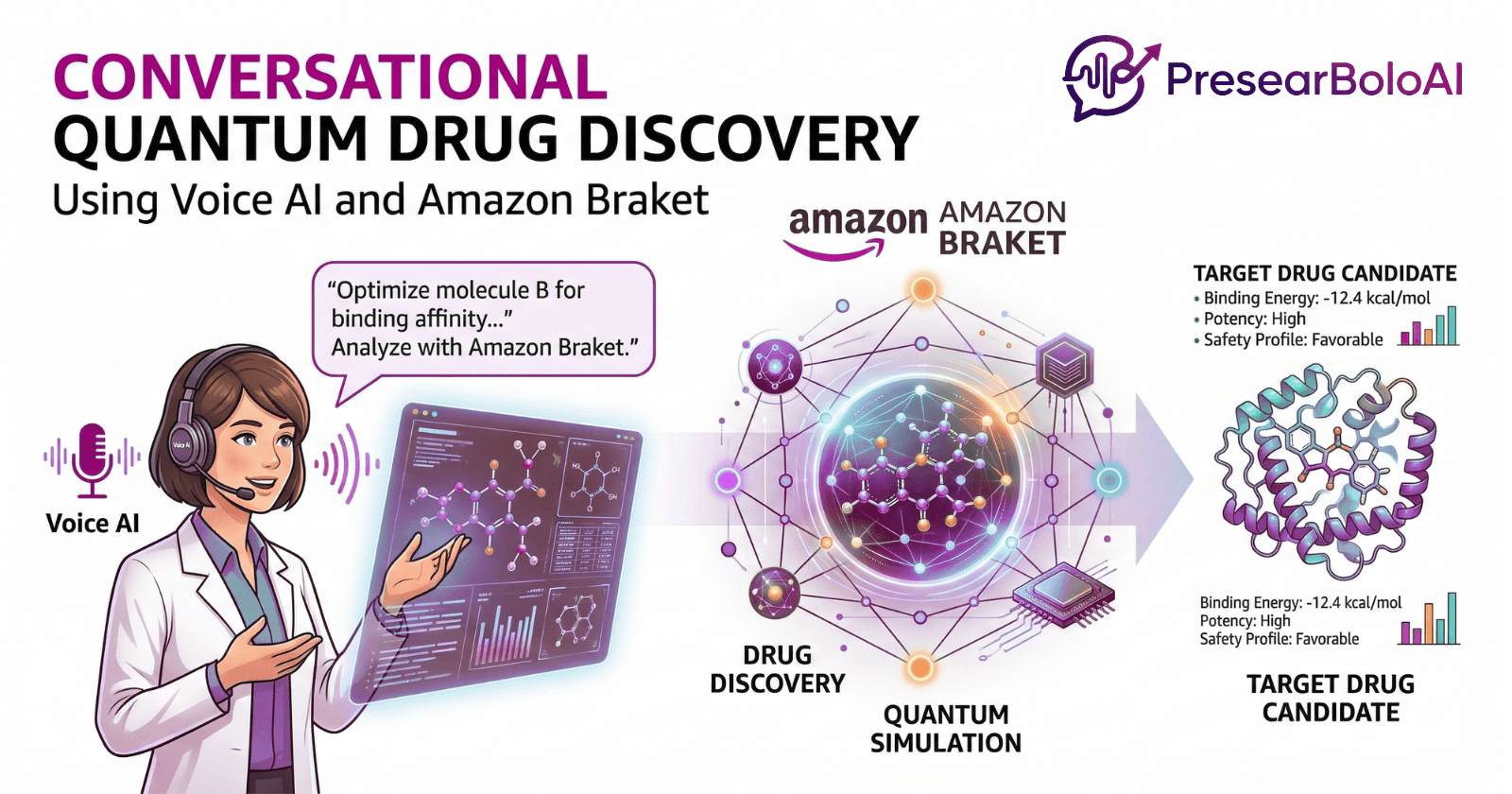
AWS Braket provides access to multiple quantum hardware providers through a single cloud API. It supports IonQ, Rigetti, Oxford Quantum Circuits, and high-performance simulators. Braket’s uniform interface allows teams to benchmark a hybrid transformer across different hardware types without modifying the model code. It also integrates with Amazon SageMaker for training orchestration.
Azure Quantum
Azure Quantum offers access to diverse quantum simulators and early-stage hardware along with a production-ready environment for experiment management. It is suitable for organizations interested in enterprise-grade workflow integration and governance.
For rapid prototyping: PennyLane + PyTorch.
For circuit-level control: Cirq + TensorFlow Quantum.
For real hardware execution: Qiskit + IBM Quantum, or Braket for multi-vendor support.
For enterprise workflow integration: Azure Quantum or AWS Braket.
These platforms make hybrid transformers achievable today without requiring access to fault-tolerant quantum hardware.
Although quantum computing is still in its early stages, several research groups have conducted meaningful benchmarks demonstrating how hybrid quantum–classical transformer components behave on real tasks. These results do not claim superiority over full classical transformers, but they provide valuable insight into where hybrid architectures can offer benefits such as improved expressivity, reduced parameter counts, or better sample efficiency.
Quantinuum’s Quixer Prototype
Quantinuum introduced Quixer, a quantum-inspired attention model evaluated on a realistic language-modeling dataset. The model matched or approached the accuracy of a small classical transformer while using significantly fewer parameters. Early experiments also suggested that quantum overlap-based similarity scores can capture structural patterns that classical dot products do not represent as efficiently.
Researchers working with CERN datasets constructed a Quantum Vision Transformer (QViT) that integrated variational quantum circuits into patch-embedding and attention components. When tested on jet-classification tasks in high-energy physics, the hybrid model achieved accuracy close to a classical Vision Transformer of comparable size. These experiments show that quantum modules can process complex spatial correlations without increasing the model’s parameter count.
Quantum NLP With lambeq and PennyLane
The lambeq toolkit, combined with PennyLane, demonstrated quantum-enhanced sentence classification using grammatical structures encoded as quantum circuits. Although datasets were small, the hybrid circuits captured linguistic dependencies more compactly than classical recurrent networks. This suggests potential benefits in low-resource or specialized NLP tasks.
Quantum Kernel Attention Studies
Multiple studies evaluated quantum kernels for attention scoring on simulated quantum hardware. These kernels provided competitive or improved performance compared to classical kernel methods, especially when the underlying data exhibited high-order interactions or non-linear structures.
Summary of Results
Across these studies, three consistent findings emerge:
Hybrid architectures can reach accuracy that is competitive with small classical transformers.
Quantum components often require fewer parameters to represent complex patterns.
Hybrid models sometimes learn faster or with fewer samples in tasks involving structured scientific or physical data.
Business Applications for 2025–2030
Hybrid quantum–classical transformers are not yet positioned to replace large classical models, but they already offer practical value in targeted business domains where data structures are complex and classical models struggle to extract higher-order relationships. The following use cases represent realistic areas where organizations can begin adopting quantum-enhanced architectures between 2025 and 2030.
Drug Discovery and Molecular Modeling
Pharmaceutical research generates molecular structures with intricate spatial and electronic correlations. Hybrid quantum transformers can embed molecular descriptors into quantum states, enabling more expressive representations for property prediction, toxicity classification, and binding-affinity estimation. Quantum attention kernels are particularly effective for comparing molecular graphs and conformations where classical similarity metrics are limited. These improvements can accelerate early-stage drug-screening pipelines and reduce experimental costs.
Financial Risk and Portfolio Analysis
Financial systems involve multi-variable interactions, non-linear dependencies, and noise. Quantum kernels and variational circuits can evaluate high-dimensional relationships that challenge classical methods. Hybrid transformers can enhance credit-risk scoring, scenario modeling, market anomaly detection, and asset correlation analysis. Because financial datasets are often structured and tabular, they map well to compact quantum embeddings.
Cybersecurity and Threat Detection
Security systems monitor large sequences of events, logs, and anomalies. Quantum-enhanced attention can identify irregular patterns that occur infrequently but have high impact. Hybrid architectures can support malware classification, intrusion detection, and behavioral anomaly analysis with improved sensitivity compared to standard sequence-classification models.
Manufacturing and Industrial Vision
In industrial inspection tasks, defects or anomalies often have subtle visual cues. Quantum Vision Transformers have shown promise in physics-based imaging and can be applied to manufacturing quality assurance, defect localization, and process-monitoring analytics. Quantum-enabled embeddings can highlight texture, contour, and micro-pattern correlations that classical models overlook.
Sustainability and Energy Optimization
Large classical models consume significant energy. Hybrid transformers, with fewer parameters in critical subcomponents, can reduce compute energy for inference in edge or near-edge industrial settings. This creates opportunities in smart grids, renewable-energy forecasting, and resource-allocation optimization.
Medical sequences such as ECG, EEG, and genomic data exhibit complex temporal and structural patterns. Quantum kernels and variational circuits can capture long-term dependencies and irregular dynamics more effectively than shallow classical models. Applications include disease-onset prediction, patient-risk modeling, and personalized treatment planning.
Research results from leading institutions demonstrate that hybrid quantum components can match or approach the performance of small classical transformers while frequently requiring fewer parameters or training samples. These early findings are especially promising in domains where data structures are intricate, correlations are non-linear, and conventional models struggle to extract deep patterns. Industry applications in pharmaceuticals, finance, cybersecurity, manufacturing, and healthcare illustrate the practical value of these architectures even before the arrival of large fault-tolerant quantum processors.
For Presear Softwares, this field presents an opportunity to lead in an emerging technological space. By developing reference implementations, benchmarking quantum attention modules, designing efficient quantum encoders, and validating use cases across industry verticals, Presear can position itself at the forefront of applied quantum AI. The investment required is incremental and low-risk, while the long-term potential is significant.
As quantum hardware matures over the next decade, hybrid architectures will become increasingly capable, eventually serving as foundational building blocks for fully quantum models. Organizations that begin experimenting now will possess the technical knowledge, operational readiness, and intellectual property necessary to capitalize on this shift. Hybrid quantum transformers are therefore not only a technological milestone but also a strategic bridge to the next era of machine intelligence.