

Historical Trend Analysis for Demand Forecasting— A Presear Softwares Pvt. Ltd. Use Case
I
Head (AI Cloud Infrastructure), Presear Softwares PVT LTD
Search for a command to run...
Head (AI Cloud Infrastructure), Presear Softwares PVT LTD
No comments yet. Be the first to comment.
Explore the forefront of AI innovation with Presear Softwares' AI Series, delving into machine learning for automation and neural networks for predictive analytics, unlocking AI's transformative potential across industries.
How Presear Softwares Empowered the National Institute of Wind Energy with Intelligent Asset Tracking

An ICSSR Project Implementation by Presear Softwares

A Hybrid Architecture for Voice-Driven Molecular Simulation and Quantum Chemistry Experiments

How PresearVisionXTrans™ Can Secure Large Gatherings like Holi

How Presear Engineered a Burst-Resilient Government Recruitment Portal using AI-Ready Scalable Architecture
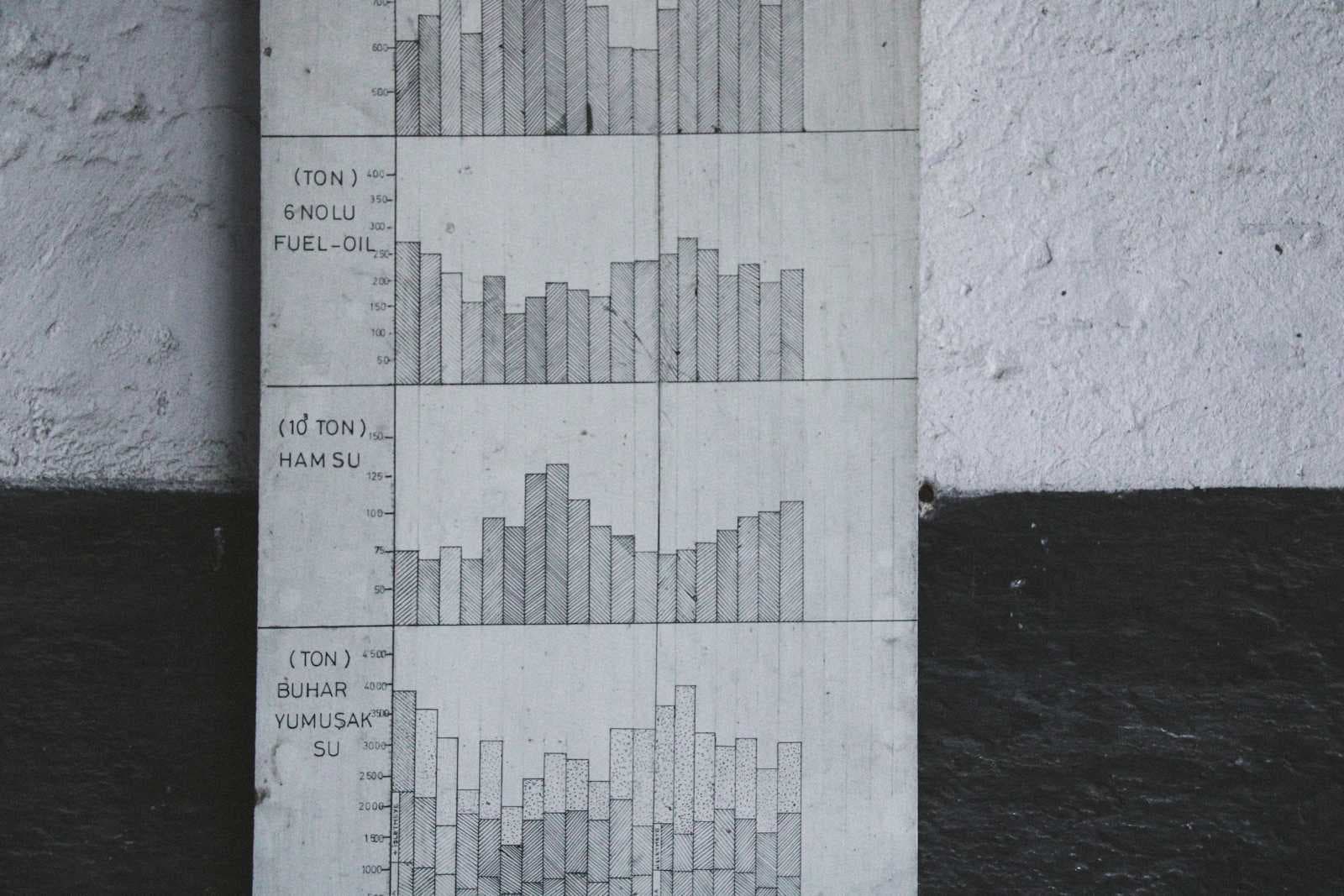
In today’s fast-moving markets, inaccurate demand planning is more than an operational nuisance — it’s a profit killer. Excess inventory ties up cash and warehouse space; stockouts cost sales, customer trust, and long-term loyalty. For industries such as pharmaceuticals, retail supply chains, and consumer packaged goods, the margin between profit and loss often comes down to how well an organization anticipates demand. This is where Presear Softwares Pvt. Ltd. steps in with a pragmatic, data-driven use case: applying historical trend analysis to dramatically improve demand forecasting accuracy and, consequently, inventory efficiency and waste reduction.
Most organizations rely on a mix of spreadsheets, manual adjustments, and intuition to forecast demand. Common problems include:
Reactive—not predictive—planning: Teams react to recent events instead of using long-term patterns.
Siloed data: Sales, promotions, returns, and supply data live in separate systems, making consistent modeling impossible.
Seasonality & promotions misread: Special events, promotions, or regulatory changes skew short-term trends, confusing simple averaging methods.
Lack of granular forecasting: Forecasts at the wrong aggregation (e.g., at SKU category instead of SKU × store) miss localized demand patterns.
Poor handling of new products: New SKUs or reformulated drugs lack historical data; naïve methods fail to give reasonable starting forecasts.
These issues are particularly acute in pharma (short shelf-life, regulatory batch recalls), retail (multi-channel complexity, local trends), and consumer goods (promotions, seasonal spikes). Left unsolved, they cause overstocking (waste, expiry) and stockouts (lost revenue, poor customer experience).
Presear Softwares offers a practical, enterprise-ready solution that marries classical time-series analysis with modern machine learning and robust business integration. The core idea is straightforward: leverage detailed historical data, extract stable patterns (trend, seasonality, cycles), and combine them with causal signals (promotions, price changes, marketing, weather, regulatory events) to produce accurate, explainable demand forecasts at the right level of granularity.
Data integration & cleansing
Connectors to ERP, POS, WMS, CRM, and third-party sources (market data, weather, holidays).
Automated data quality checks (duplicates, missing values, outliers) and lineage tracking so analysts can trust the inputs.
Feature engineering & enrichment
Create features: rolling averages, lags, seasonality indexes, price elasticity proxies.
Enrich with external signals: regional holidays, epidemiological alerts (for pharma), footfall data (retail), and promotional calendars.
Hybrid forecasting models
Traditional time-series models (ARIMA, SARIMA, exponential smoothing) to capture trend/seasonality.
Advanced ML models (Gradient Boosting, Random Forests, LSTM/Transformer-based models) for complex non-linear relationships and cross-SKU learning.
Ensemble strategies to combine models and stabilize forecasts.
SKU × Location granularity
Explainability & business rules
Model explainers that show which features drove a forecast (e.g., recent promo lift, holiday effect).
Business-rule overlays: safety stock constraints, shelf-life/expiry rules in pharma, vendor lead-time adjustments.
Scenario planning & “what-if” simulations
Closed-loop learning
Discovery & data mapping (2–4 weeks)
Presear’s consultants map data sources, identify KPIs, and set target service-levels and waste reduction goals. This phase surfaces quick wins and data gaps.
Data pipeline & model build (4–8 weeks)
Build automated ETL, cleansing routines, and baseline models. Presear uses a modular approach so the client sees early forecasts and can provide feedback.
Pilot (8–12 weeks)
Run a pilot on a subset of SKUs/stores or a product line (e.g., top 200 SKUs or a regional cluster). Measure forecast accuracy improvements (MAPE, RMSE), inventory turns, stockouts, and waste reduction.
Rollout & integration (3–6 months)
Scale to all SKUs, integrate with order management and replenishment engines, and automate purchase/safety stock suggestions.
Continuous improvement
Monthly model refreshes, quarterly feature workshops with business stakeholders, and ad-hoc scenario analysis for promotions, product launches, or regulatory changes.
Problem: A pharmaceutical distribution company suffered 12% product expiry-related write-offs annually and 7% lost sales due to stockouts on essential drugs.
Presear intervention:
Integrated sales, batch expiry, returns, and hospital order data.
Built SKU × region forecasts using ensemble models that accounted for regulatory batch release dates and hospital procurement cycles.
Implemented expiry-aware replenishment: forecasted demand minus predicted returns, adjusted for product shelf-life and FIFO constraints.
Results (first 12 months):
Forecast accuracy (MAPE) improved from 32% to 11% at SKU × region level.
Expiry-related write-offs reduced by 70%.
Stockouts decreased by 60%, increasing on-time fill rate and customer satisfaction.
Working capital tied up in inventory reduced by 18%.
Presear frames ROI in operational and financial terms:
Forecast accuracy (MAPE, RMSE): Primary measure; expect 30–65% relative improvement depending on baseline.
Inventory days of supply / inventory turns: Typical improvement of 10–25% in retail and consumer goods after rollout.
Waste / expiry reduction: Particularly in pharma, reductions can be 50–80% with expiry-aware logic.
Stockout rate / fill rate: Improvements in fill rate (2–10 percentage points) translate to measurable revenue preservation.
Working capital freed: Lower average inventory reduces capital tied up—often reclaimed within 6–18 months post-implementation.
Promotion ROI: Better baseline forecasts reduce over-ordering for promotions and improve promotional ROI.
There’s a misconception that throwing more data and a deep neural net at the problem will magically fix demand errors. Historical trend analysis is not about nostalgia; it’s about structure. Historical data contains the imprint of recurring patterns, seasonality, product life cycles, and customer behavior. Extracting that structure provides:
Stable baselines that ML models can augment rather than replace.
Explainable drivers of demand so planners can trust and act on forecasts.
Robustness to noise — trend decomposition separates signal from promotional noise and one-off events.
Better handling of sparse data through cross-learning across SKUs and hierarchical modeling.
Presear’s strategy deliberately combines rigorous historical analysis with causal features (promos, prices, external events) so forecasts are both accurate and actionable.
Technology alone won’t change outcomes. Presear emphasizes:
Planner-friendly interfaces: Forecast overrides, comment capture, and easy scenario creation empower planners to add domain knowledge without breaking models.
Training & governance: Role-based dashboards for planners, category managers, and executives; training workshops on interpreting model outputs and setting business rules.
Governed autonomy: Auto-replenishment suggestions with human-in-the-loop approvals during early rollout, moving to higher automation as trust builds.
Cross-functional alignment: Monthly review cycles that bring procurement, sales, and supply chain together to interpret forecast drivers and update promotional calendars.
Cold-start SKUs: Use hierarchical/matrix factorization and attribute-driven forecasts (product attributes, launch sequence, channel type) to create reasonable initial estimates.
Promotional volatility: Model promotion lift and cannibalization explicitly and use past promotion outcomes to estimate expected uplift.
Supplier lead-time variability: Integrate lead-time distributions into safety stock calculations; simulate supplier delays in scenario planning.
Data quality issues: Automated anomaly detection and a “data health” dashboard fix problems before they poison models.
For pharma, retail, and consumer goods companies, effective demand forecasting is not a back-office exercise — it’s a strategic capability. Presear Softwares Pvt. Ltd. helps organizations convert historical patterns into robust forecasts, reducing waste, freeing working capital, and protecting revenue. The value is immediate (fewer stockouts, less expiry) and cumulative (better supplier terms, improved promotional ROI, and smarter product launch strategies).
Historical trend analysis is the backbone; modern ML and business integration are the engine. Presear’s blend of domain expertise, explainable modeling, and pragmatic deployment ensures forecasts that are not only statistically better but operationally useful. The result? Smarter inventory, happier customers, and a healthier bottom line.
If your organization struggles with overstock, expiry, unpredictable promotions, or siloed forecasting, Presear’s historical trend analysis-driven demand forecasting is a use case that delivers measurable business outcomes — fast.