

Energy Consumption Optimization for Space Stations: A Strategic Use Case of Presear Softwares Pvt. Ltd.

I
Head (AI Cloud Infrastructure), Presear Softwares PVT LTD
Search for a command to run...
Head (AI Cloud Infrastructure), Presear Softwares PVT LTD
No comments yet. Be the first to comment.
Explore the forefront of AI innovation with Presear Softwares' AI Series, delving into machine learning for automation and neural networks for predictive analytics, unlocking AI's transformative potential across industries.
How Presear Softwares Empowered the National Institute of Wind Energy with Intelligent Asset Tracking
An ICSSR Project Implementation by Presear Softwares

A Hybrid Architecture for Voice-Driven Molecular Simulation and Quantum Chemistry Experiments

How PresearVisionXTrans™ Can Secure Large Gatherings like Holi

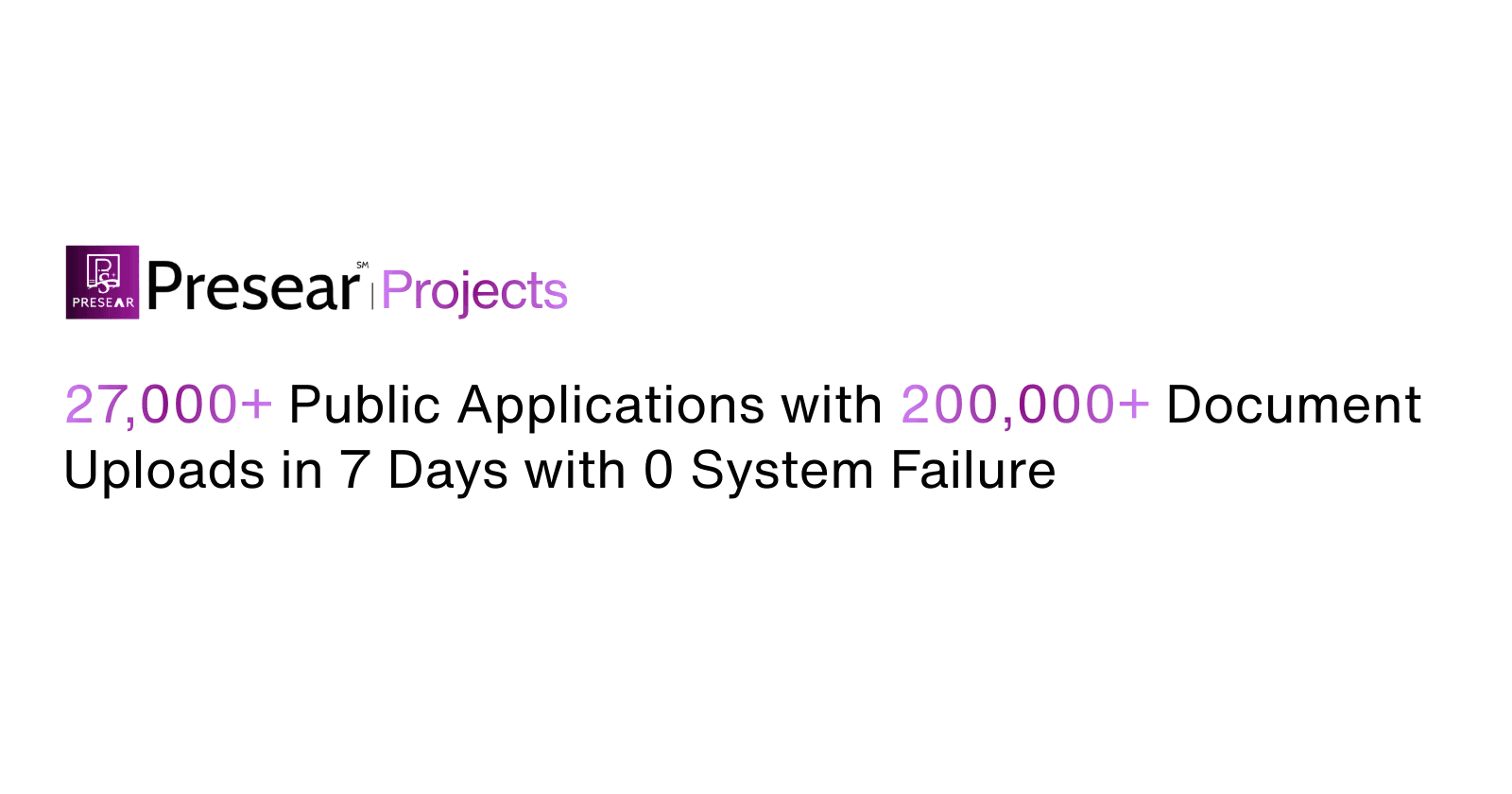
How Presear Engineered a Burst-Resilient Government Recruitment Portal using AI-Ready Scalable Architecture
Space exploration has evolved from short-term missions to ambitious long-duration stays aboard space stations and orbital habitats. As humanity prepares for deeper ventures into the Moon, Mars, and beyond, the need for reliable, optimized, and intelligent energy systems has become paramount. Energy is the backbone of every space mission — it powers life support, communication systems, research tools, propulsion modules, and environmental control systems. Poor energy planning does not merely represent inefficiency; it can directly endanger astronaut safety and jeopardize mission sustainability.
In this high-risk environment, the integration of advanced software intelligence becomes the key to ensuring uninterrupted operations. This is where Presear Softwares Pvt. Ltd., an emerging leader in artificial intelligence, automation, and mission-critical software engineering, steps in. By designing AI-driven energy optimization platforms tailored for extraterrestrial environments, Presear is addressing one of the most pressing challenges in modern space exploration.
This detailed article explores the end-to-end use case of Energy Consumption Optimization for Space Stations and how Presear Softwares offers futuristic, accurate, and resilient technological solutions.
Space stations operate in a closed ecosystem where energy supply is limited, fragile, and highly dependent on environmental conditions. Solar energy, which powers most orbital habitats, is intermittent due to orbital shadows, degradation of solar arrays, dust accumulation (for lunar or Martian bases), and fluctuating positions relative to the sun.
Key challenges that make energy optimization indispensable:
Unlike Earth, space stations cannot simply expand their grid capacity. Solar panels have fixed output ceilings, and battery storage ages over time.
Every second of breathable air, water recycling, temperature regulation, and CO₂ scrubbing depends on stable power.
Scientific experiments, communication with Earth, navigation, and thermal regulation all consume substantial energy.
During solar storms, cosmic radiation bursts, or extended eclipse periods, energy availability can fluctuate dramatically.
Any power outage is catastrophic, risking:
Crew safety
Mission success
Infrastructure integrity
Billions of dollars in damages
Thus, smart, predictive, and automated energy management is no longer optional — it is a necessity for modern space infrastructure.
Presear Softwares has built its reputation around delivering AI-first, automation-focused, and high-reliability solutions for critical sectors. Applying this expertise to the aerospace domain, the company introduces a comprehensive Energy Consumption Optimization Framework for Space Stations.
This solution blends AI algorithms, sensor analytics, digital twins, and real-time monitoring to continuously optimize how energy is produced, stored, and consumed.
Below is a breakdown of how Presear’s system works.
Using historical mission data, solar exposure charts, crew schedules, and system performance logs, Presear's AI models predict:
Future energy consumption
Solar panel energy generation
Battery degradation patterns
Peak demand periods
Risk of system overload
This enables mission teams to allocate energy more strategically.
Presear’s solution intelligently distributes power resources depending on priority levels:
Tier-1: Life support, communication, thermal control
Tier-2: Scientific experiments, workstation equipment
Tier-3: Non-essential operational utilities
By automatically throttling or scheduling non-critical loads, the system prevents energy shortages before they occur.
Advanced sensors integrated with Presear’s analytical model track:
Solar array efficiency
Power conversion losses
Degradation patterns
Thermal anomalies
Battery cycles, voltage drops, and capacity fade
This gives the crew and mission control early warnings of potential failures.
Presear builds a digital replica (digital twin) of the entire energy network of the station. It allows testing:
New experiment load demands
Equipment upgrades
Emergency scenarios
Power outage simulations
Eclipse duration impacts
Simulation results help refine energy strategies without risking actual mission systems.
During critical failures, the system:
Automatically reroutes energy
Shuts down non-essential units
Activates emergency reserves
Alerts mission control with predictive insights
This ability to think and act faster than humans ensures maximum safety.
The implementation of Presear’s AI-driven energy optimization delivers measurable improvements.
Life support systems remain stable, eliminating the risk of power-related accidents.
Efficient energy usage allows missions to stretch beyond conventional timeframes without needing additional supplies.
Predictive diagnostics help detect system failures before they become severe, saving cost and extending equipment life.
By balancing loads intelligently, more scientific experiments can run simultaneously.
Lower energy wastage means reduced launch resupply missions, saving millions of dollars.
Imagine a space station orbiting Earth at 400 km altitude. The crew performs dozens of experiments daily, operates life support systems continuously, and periodically goes through 35-45 minute eclipse phases where no sunlight reaches the solar panels.
Presear’s system detects:
Sudden 8% drop in panel output
Rising battery temperatures
Increasing load from experiment modules
Without optimization, this could result in insufficient energy during the next eclipse.
With Presear’s system:
AI predicts energy insufficiency 6 hours before eclipse
Non-critical systems are automatically slowed
Life-support gets prioritized
Battery charge cycles are optimized to store maximum energy
Mission control receives an alert with recommended manual actions
A digital twin simulation validates corrective decisions
Outcome:
Power remains stable
Crew safety is ensured
Mission continues without disruption
Presear Softwares uses a modular, scalable, and secure tech stack:
Python, TensorFlow, PyTorch
Reinforcement learning for load optimization
Predictive analytics models
Real-time anomaly detection algorithms
Telemetry data ingestion systems
Onboard energy measurement sensors
Edge computing for rapid decision-making
Digital twin engines
High-fidelity simulation models
Hardware-in-the-loop testing systems
End-to-end encryption
Zero-trust architecture
AES-256 for data at rest
This ensures Presear’s solutions meet the stringent security and stability standards of aerospace missions.
Tailored for specific mission requirements, orbital routes, or extraterrestrial locations.
Algorithms are designed to operate in high-risk, zero-failure environments.
Expandable to support lunar bases, Mars colonies, or commercial space stations.
Presear collaborates closely with space agencies, research organizations, and private aerospace companies.
Presear Softwares aims to push boundaries further by developing:
Allowing habitats to manage energy independently with minimal human intervention.
For real-time computation of complex energy distribution logic.
Optimizing new forms of extraterrestrial renewable energy such as:
Lunar solar farms
Helium-3 reactor modules
Wireless energy transfer
Supporting missions to Mars, Europa, and deep-space probes.
As humanity’s reach extends deeper into space, ensuring reliable and sustainable energy management becomes one of our greatest challenges. Energy is the lifeline of every orbital habitat, supporting both human survival and scientific advancement. Presear Softwares Pvt. Ltd., with its expertise in AI-driven systems, advanced analytics, and mission-critical software engineering, is uniquely positioned to revolutionize how energy is managed beyond Earth.
Through predictive modeling, intelligent automation, digital simulations, and real-time monitoring, Presear’s Energy Consumption Optimization system provides space agencies and private space operators with unparalleled efficiency, safety, and mission longevity.
This use case not only demonstrates Presear Softwares' technological capability but also affirms its commitment to contributing to the future of space exploration — a future where energy is smarter, safer, and always mission-ready.