

Customer Behavior Anomaly Detection — Use Case for Presear Softwares PVT LTD

I
Head (AI Cloud Infrastructure), Presear Softwares PVT LTD
Search for a command to run...
Head (AI Cloud Infrastructure), Presear Softwares PVT LTD
No comments yet. Be the first to comment.
Explore the forefront of AI innovation with Presear Softwares' AI Series, delving into machine learning for automation and neural networks for predictive analytics, unlocking AI's transformative potential across industries.
How Presear Softwares Empowered the National Institute of Wind Energy with Intelligent Asset Tracking

An ICSSR Project Implementation by Presear Softwares

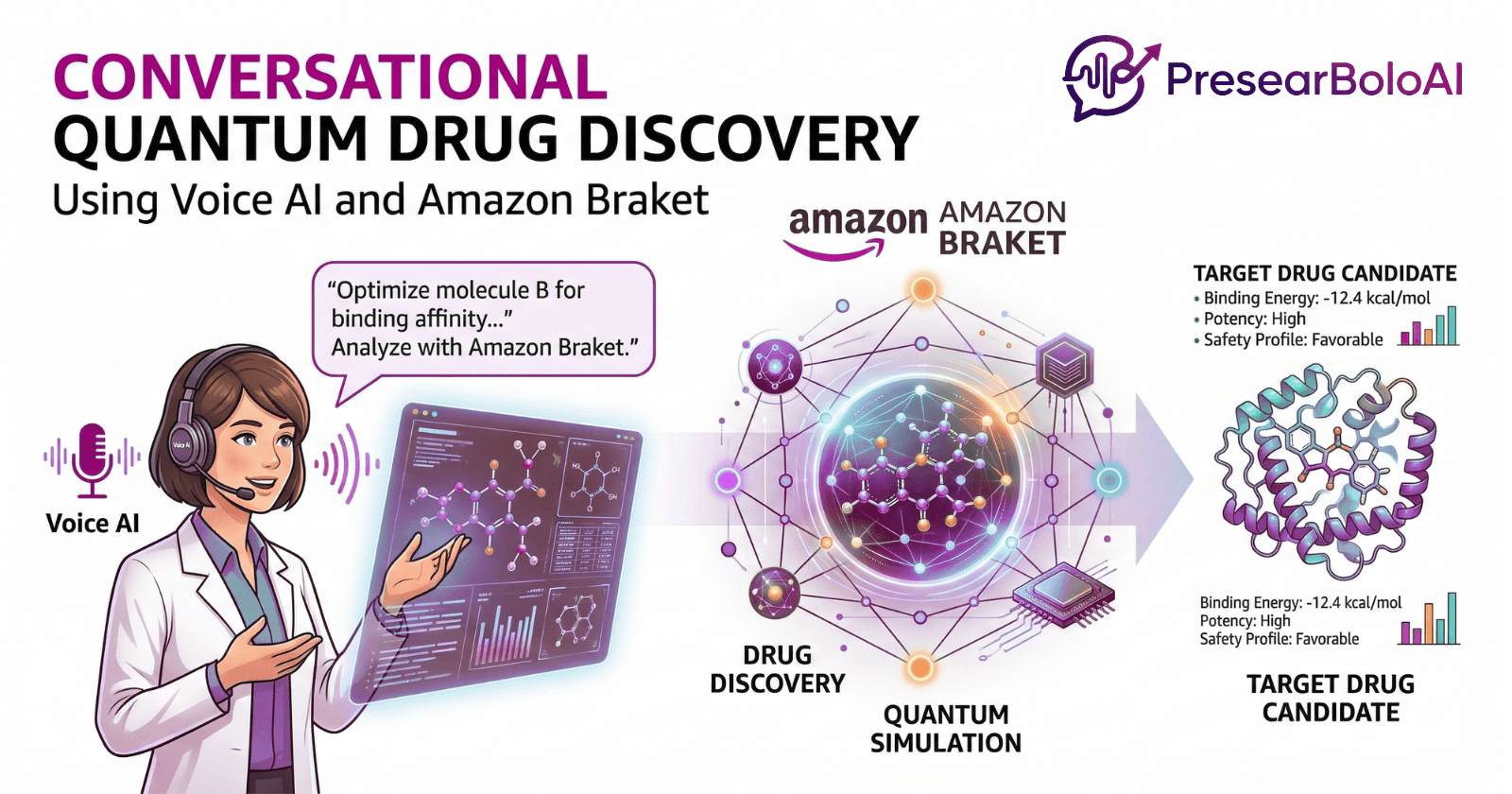
A Hybrid Architecture for Voice-Driven Molecular Simulation and Quantum Chemistry Experiments
How PresearVisionXTrans™ Can Secure Large Gatherings like Holi

How Presear Engineered a Burst-Resilient Government Recruitment Portal using AI-Ready Scalable Architecture
On this page
Unnoticed drops and unusual shifts in customer behavior—abandoned carts, sudden declines in product pages viewed, or abrupt falloffs in checkout completion—are silent revenue leaks for Direct-to-Consumer (D2C) brands, fashion retailers, and e‑commerce apps. Presear Softwares PVT LTD offers a turnkey Customer Behavior Anomaly Detection solution that continuously monitors user journeys, identifies anomalous patterns in real time, surfaces root causes, and triggers corrective actions that restore conversions and protect revenue.
This document outlines the problem, the Presear approach, technical architecture, machine learning strategies, implementation plan, success metrics, privacy and governance considerations, and expected business impact.
E‑commerce customer journeys consist of many micro‑moments—product discovery, description reads, size selection, add‑to‑cart, shipping choices, and checkout completion. A small change in any step can cascade into large conversion losses. Common scenarios include:
UX regressions after a release causing checkout friction.
Third‑party script errors slowing product pages on specific browsers or regions.
Promo code failures or price mismatches during peak campaigns.
Inventory sync issues leading to "out of stock" states at checkout.
Fraud filters falsely blocking legitimate users.
Without automated anomaly detection, these issues are detected late (or never), often only after customer support complaints or week‑end revenue dips. Manual monitoring is noisy, slow, and unable to correlate multi‑channel signals.
D2C brands and fashion retailers depend on high conversion rates, repeat purchase behavior, and tightly timed marketing campaigns. Specific reasons anomaly detection is crucial:
Margin sensitivity: Small percentage improvements in checkout conversion map directly to disproportionate revenue gains.
Seasonality & campaigns: Flash sales and influencer drops require confidence that the funnel is healthy in real time.
High product variety: Fashion SKU churn and size/fit complexity increase risk of UX or inventory problems.
Brand reputation: Rapid mitigation prevents social media amplification of negative experiences.
Presear’s Customer Behavior Anomaly Detection product provides a full stack solution:
Data collection: Instrumentation SDKs and connectors ingest event streams from web, mobile apps, POS systems, and third‑party ad and analytics platforms.
Feature engineering & enrichment: Build user journey features (e.g., time on product page, add‑to‑cart ratio, checkout step drop‑off) and enrich with contextual data (device, browser, geo, campaign, SKU, inventory state).
Unsupervised detection: Use combined statistical and ML techniques to detect both global and cohort‑specific anomalies in real time.
Root‑cause analysis: Automated attribution via causal heuristics and model explainability (SHAP/feature importance) to surface likely causes—code deploy, browser, region, SKU, campaign.
Alerting & remediation: Multi‑channel alerts (Slack, e‑mail, PagerDuty) with suggested remediation playbooks and the option to automatically rollback releases or pause campaigns.
Reporting & dashboarding: Executive and operational dashboards showing incident timeline, impact estimate, and trend recovery.
Presear’s system can integrate with common event and data sources:
Client‑side event streams (via JavaScript/SDK): page views, clicks, add‑to‑cart, checkout steps, errors.
Mobile app events (iOS/Android SDKs).
Backend logs: checkout API latencies, payment gateway responses, inventory update logs.
Third‑party integrations: CDN logs, A/B testing platforms, advertising platforms (UTM/campaign metadata), CRM.
Business metadata: SKU catalog, pricing tables, promo schedules, release deploy times.
Data frequency can range from near‑real‑time (streaming) to hourly batch depending on volume and SLAs.
No single technique fits all anomalies. Presear uses a layered strategy:
Compute rolling baselines and prediction intervals for core funnel metrics (e.g., conversion rate, add‑to‑cart rate, checkout completion). Use robust changepoint detection and EWMA to catch abrupt shifts.
Isolation Forests / Robust PCA for high‑dimensional joint behavior anomalies.
Autoencoders to model normal user journey patterns; large reconstruction errors indicate anomalies.
Density‑based methods (e.g., Local Outlier Factor) for detecting cohort‑specific deviations (e.g., mobile users in a specific region).
Apply methods like Prophet with anomaly scoring, Seasonal Hybrid ESD, and LSTM‑based forecasting for longer‑term trend anomalies and seasonality‑aware detection.
Aggregate metrics by device, browser, OS, geography, campaign, and SKU to detect targeted issues that global signals miss (e.g., Safari + iOS 17 specific checkout failures).
On detection, the system runs causal heuristics and interpretable models to rank likely causes: recent deploys, changes in third‑party resources, abandoned payment provider responses, or inventory mismatches.
Stakeholder interviews: product, engineering, analytics, operations.
Map existing event schema and define additional events if needed.
Deploy lightweight client SDK for event capture and server connectors.
Baseline historical data ingestion and initial dashboards.
Train baseline & unsupervised models on historical data.
Configure cohort breakdowns and sensitivity thresholds (business adjustable).
Integrate alert channels and build playbooks for common incidents.
Run in shadow/alert mode against live traffic; refine false positive suppression.
Add automated remediation options (e.g., feature flag rollback, campaign pause) guarded by approvals.
Monitor model performance, calibration, and feedback loops from SRE/CS teams.
Periodic retraining and update of cohorts and thresholds.
Presear measures effectiveness through both detection and business KPIs:
Mean time to detect (MTTD): target under 5 minutes for critical checkout issues.
Mean time to resolve (MTTR): with automated playbooks, reduce MTTR by 40–70%.
False positive rate: tuned to under 10% for operational alerts.
Revenue at risk identified: estimate immediate revenue impact per incident (conversion drop × daily revenue share).
Recovered revenue: tracked by comparing post‑remediation conversion lift vs expected baseline.
Real‑world examples show that catching a 5% drop in checkout conversion within hours instead of days can recover tens of thousands of dollars in lost daily revenue for mid‑sized D2C brands.
Brand: A mid‑sized D2C fashion label running a weekend influencer sale.
Issue: During the sale, checkout conversion for customers arriving via Instagram dropped 18% compared to baseline, but overall traffic and revenue looked nominally healthy.
Detection: Presear’s cohort analysis flagged a high‑severity anomaly for UTM campaign ig_sale with elevated payment gateway timeouts from a specific region and increased JS errors for iOS 16 Safari.
Root cause: A recent CDN configuration change caused delayed loading of the payment widget for Safari on iOS, and the payment provider’s retry logic misinterpreted delayed responses as failures.
Remediation: Presear’s alerting triggered an immediate rollback of the CDN change and a targeted temporary pause on the affected campaign. The platform recommended a configuration fix and validation test.
Outcome: Checkout conversion for the ig_sale cohort recovered to within 3% of baseline within 35 minutes; estimated recovered revenue for the sale window: 28% of the day’s expected uplift.
Ingestion: Kafka or Kinesis for streaming; serverless ingestion endpoints for lower volume clients.
Storage: Time‑series store (ClickHouse, TimescaleDB) for metrics; Parquet lake for events and model training.
Models: Python ecosystem (scikit‑learn, PyTorch/TensorFlow for autoencoders), Prophet for forecasting.
Serving: Real‑time scoring via lightweight microservices, feature store for consistent features.
Observability: Dashboards (Grafana, Superset), alerting (Slack, PagerDuty), and audit logs for privacy compliance.
Presear treats customer data securely:
Data minimization: Only capture necessary events and pseudonymize user identifiers when possible.
Encryption: Data in transit and at rest encrypted using standard protocols.
Access control: RBAC, least privilege for analysts, and encrypted backups.
Compliance: Support for GDPR/CCPA workflows—data subject request handling and retention controls.
Tune sensitivity by business cycle: Higher sensitivity during campaigns; lower during normal operations to reduce noise.
Human‑in‑the‑loop: Provide easy feedback loops; when an engineer marks an alert false positive, models adapt accordingly.
Playbooks & runbooks: Predefined remediation steps for common failures (payment, CDN, cart mismatch) reduce MTTR.
A/B testing: Validate detection thresholds and remediation automation safely in staging before production rollouts.
Investment in real‑time anomaly detection pays for itself quickly for conversion‑driven brands. Savings accrue from:
Recovered lost sales during critical campaign windows.
Reduced manual monitoring and faster incident response.
Improved customer trust and fewer support escalations.
A conservative estimate: For a D2C brand with ₹10 crore annual online revenue, a 1% persistent uplift in conversion from faster detection and remediation could equal ₹10 lakh in annual revenue—often surpassing platform implementation costs within months.
Customer Behavior Anomaly Detection is a strategic capability for modern D2C and fashion e‑commerce businesses. Presear Softwares PVT LTD combines engineering-grade instrumentation, hybrid machine learning, explainable root‑cause analysis, and operational playbooks to detect, explain, and remediate conversion‑threatening anomalies quickly.
Next steps: Schedule a technical discovery workshop, provide sample event data, and run a 30‑day pilot in shadow mode to measure detection precision and business impact.
Prepared by Presear Softwares PVT LTD — delivering data driven solutions to protect conversions and grow revenue.