

Content Recommendation Engines — A Presear Softwares PVT LTD Use Case

I
Head (AI Cloud Infrastructure), Presear Softwares PVT LTD
Search for a command to run...
Head (AI Cloud Infrastructure), Presear Softwares PVT LTD
No comments yet. Be the first to comment.
Explore the forefront of AI innovation with Presear Softwares' AI Series, delving into machine learning for automation and neural networks for predictive analytics, unlocking AI's transformative potential across industries.
How Presear Softwares Empowered the National Institute of Wind Energy with Intelligent Asset Tracking

An ICSSR Project Implementation by Presear Softwares

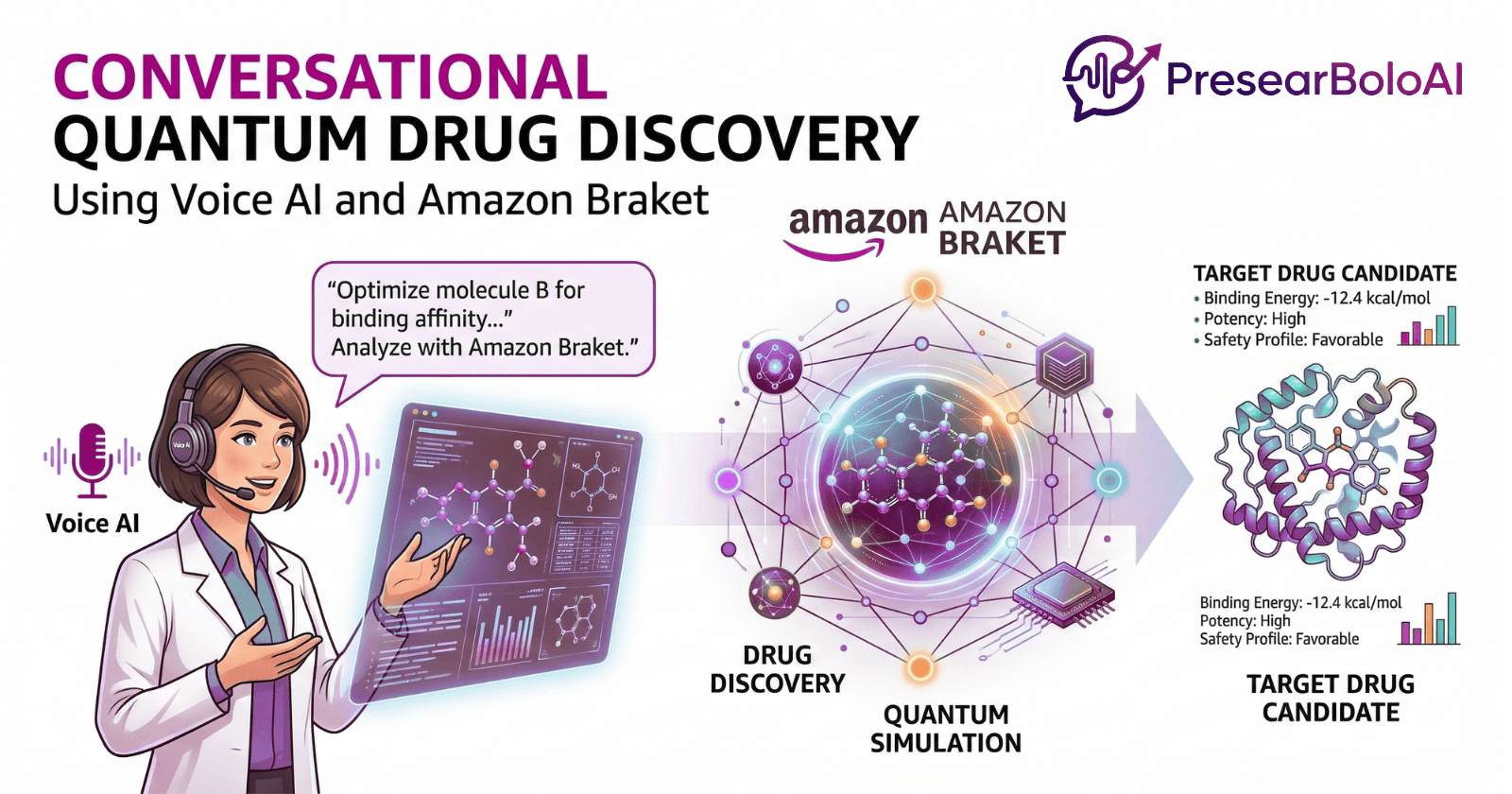
A Hybrid Architecture for Voice-Driven Molecular Simulation and Quantum Chemistry Experiments
How PresearVisionXTrans™ Can Secure Large Gatherings like Holi
How Presear Engineered a Burst-Resilient Government Recruitment Portal using AI-Ready Scalable Architecture
Personalized content is no longer a “nice-to-have” — it’s required. Viewers quickly abandon platforms that surface irrelevant titles; advertisers pay a premium for attention, and lifetime value depends on meaningful engagement. Presear Softwares PVT LTD helps streaming and social platforms turn passive catalogs into dynamic, user-centric experiences with an end-to-end content recommendation engine that increases watch-time, retention, and revenue while keeping content discovery fresh and fair.
Below is a full, practical use case that explains the problem, Presear’s solution, technology choices, implementation roadmap, monitoring & metrics, business impact, and operational considerations.
Many OTT or social platforms still rely on simple popularity or editorial curation to populate “For You” pages. Those approaches suffer from:
Cold, one-size-fits-all feeds: New users see the same top titles; active users receive stale recommendations.
Poor retention: Users quickly find nothing new and churn.
Inefficient monetization: Lower ad impressions per session and reduced subscription conversions.
Content underutilization: Niche, regional, or long-tail content gets buried.
Lack of explainability and trust: Users don’t know why something is recommended — impacting perceived relevance.
For OTTs, the cost is measured in lost viewing hours and diminished subscription renewal rates. For social apps, it’s lower session frequency and dropped ad CPMs. Presear’s content recommendation engine addresses each of these.
Presear builds a modular recommendation platform tailored to each client. The core components:
Data ingestion & enrichment
Collects streaming logs, user profiles, content metadata, contextual signals (device, time, location), and external signals (trending topics, social buzz). Presear enriches content with semantic embeddings (NLP on descriptions, tags, subtitles) and visual embeddings (thumbnail/image features) where available.
Feature store & user representation
Constructs dense user vectors that encode tastes, session intents, and temporal preferences (e.g., “weekday short-form news” vs “weekend long movies”). Maintains both long-term profiles and volatile session features.
Hybrid recommendation engine
Combines collaborative filtering, content-based models, session-based recurrent/transformer models, and graph-based approaches in a hybrid stack:
Collaborative filtering (matrix factorization / implicit feedback) for peer-similarity signals.
Deep learning for sequential patterns (SASRec, Transformer-based session models).
Content embeddings to handle new/long-tail items.
Knowledge graphs for contextual, concept-based recommendations (actors, genres, themes).
Ranking & business rules
A learning-to-rank layer merges model scores with editorial constraints, business objectives (promote originals, paid content), and fairness rules.
Real-time serving layer
Low-latency microservices and caches deliver personalized lists and widgets across devices. The platform supports both micro-personalized home pages and contextual recommendations (end-of-play, search auto-complete).
Experimentation & analytics
Built-in A/B testing, uplift modeling, and dashboarding to measure engagement, revenue, and fairness metrics.
Privacy & compliance
Data minimization, opt-out handling, and encryption to meet regulatory and platform privacy requirements.
Hybrid approach avoids single-point failures: content-only models perform poorly for new users; collaborative methods falter on new items. Hybridization leverages strengths of each.
Session-awareness captures short-term intent — crucial on mobile where sessions are short and intent shifts.
Multimodal embeddings (text + image + video metadata) improve cold-start for new titles and localized content discovery.
Graph signals enrich relationships (shared actors, similar plotlines) which surface serendipitous recommendations that increase exploration.
Online learning & throttled retraining enable models to adapt to trends (new releases, viral clips) without sacrificing stability.
Explainability layer produces human-friendly reasons (e.g., “Because you watched X”) to increase user trust and CTR.
Discovery & data audit (Week 0–2)
Map available sources (logs, metadata, user accounts). Define KPIs with stakeholders (DAU, watch-time per user, retention, ARPU).
MVP model & offline validation (Week 2–5)
Build baseline CF + content models, evaluate offline with historical logs (precision@K, recall, NDCG), and build a feature store.
Realtime serving & integration (Week 5–8)
Deploy a low-latency API to serve personalized lists; integrate with client apps and content management systems.
A/B launch & experimentation (Week 8–10)
Run controlled experiments on a fraction of traffic to measure lift in watch-time, CTR, retention.
Iterate, scale & governance (Week 10+)
Add session models, graph features, fairness constraints, and full CI/CD for models and policies. Establish monitoring and alerting.
Presear aligns with business KPIs but also tracks model-quality and platform health:
Business KPIs
Increase in average watch-time per user (target: +X% depending on baseline)
Session frequency and average session length
Churn/retention improvements (D30/D90 retention lift)
Conversion uplift (trial → paid) and ARPU
Model/Engagement KPIs
CTR on recommended items
Conversion-to-play (impression → play)
Long-tail consumption share (diversity)
Time-to-first-play for new users (cold-start metric)
Operational metrics
Latency (p95 response times)
Model drift detection (statistical divergence of input features)
Data pipeline freshness (max delay for logs to feature store)
Cold-start (users and items): Presear emphasizes content embeddings and instant demographic/session priors. New users see on-boarding prompts to capture quick signals.
Scalability: Microservice architecture, feature caching, and approximate nearest neighbor search (e.g., FAISS) enable low-latency at millions of queries per second.
Diversity vs. engagement trade-off: Customizable ranking to balance short-term CTR and long-term retention via exploration policies (Thompson sampling / contextual bandits).
Fairness & editorial control: Admin controls let product teams enforce quotas (e.g., promote regional content), while the explainability module shows why recommendations were surfaced.
Privacy: Presear supports hashed identifiers, client-side personalization, and privacy-preserving aggregation where required.
OTT platform (case): After deploying Presear’s hybrid engine, an OTT client observed higher session depth and more frequent sessions. Personalized “Continue Watching” + “Because you liked…” widgets increased plays from the home screen, reducing churn among casual viewers.
Short-form streaming service: Session-based models raised completion rates and watch-through for short videos. A/B experiments showed a measurable uplift in daily active users and ad impressions per session.
Social video app: Graph-backed recommendations increased discovery of creator content across languages, improving creator monetization and platform stickiness.
(These are representative outcomes; Presear always runs tailored experiments against client baselines.)
Presear offers flexible engagement models:
Platform as a Service (PaaS) — managed deployment with SLAs, periodic model refreshes, dashboards.
On-prem / Hybrid — for partners requiring data residency.
Consulting & knowledge transfer — training internal teams to run and extend models.
Presear also provides documentation, production runbooks, and a monitoring console for real-time insights.
Presear embeds safeguards:
Transparency: Provide users with reasons for recommendations and opt-out settings.
Content diversity: Monitor echo-chamber effects and correct them through exploration policies.
Responsible A/B testing: Avoid harmful experiment regimes, and include human oversight for sensitive content.
Regulatory compliance: Support for data-subject requests, deletion, and export workflows.
Domain-tailored models: Presear’s team builds models specifically for media consumption behaviors rather than one-size-fits-all recommender kits.
Engineering-first production approach: Focus on low-latency serving, scalability, and operational excellence.
Experimentation culture: Strong emphasis on measurement, uplift modeling, and continuous improvement.
Multimodal & graph expertise: Ability to combine text, visual, and relational signals for better discovery.
Export 30 days of anonymized engagement logs and content metadata.
Define 3 measurable KPIs (e.g., watch-time/day, retention D30, CTR on home recommendations).
Run a quick offline evaluation to compare baseline popularity-ranking vs. hybrid model.
Launch a 5% A/B experiment on new personalized home-page widget.
Iterate weekly and expand rollout upon positive uplift.
Generic content delivery no longer meets user expectations. For OTT platforms, social apps, and streaming services, a robust recommendation engine is the lever that transforms passive catalogs into engaging, revenue-driving experiences. Presear Softwares PVT LTD delivers an end-to-end, production-grade solution — combining hybrid models, real-time serving, explainability and rigorous experimentation — so platforms can maximize engagement while maintaining fairness and privacy.
If you’d like, Presear can run a free discovery audit of your current recommendation stack and provide a prioritized roadmap with expected KPI lifts and technical trade-offs. Want to start with a 30-day audit?