Computer Vision for Worker Safety Monitoring-A Presear Softwares Pvt. Ltd. use case
I
Head (AI Cloud Infrastructure), Presear Softwares PVT LTD
Search for a command to run...
Head (AI Cloud Infrastructure), Presear Softwares PVT LTD
No comments yet. Be the first to comment.
Explore the forefront of AI innovation with Presear Softwares' AI Series, delving into machine learning for automation and neural networks for predictive analytics, unlocking AI's transformative potential across industries.
How Presear Softwares Empowered the National Institute of Wind Energy with Intelligent Asset Tracking
An ICSSR Project Implementation by Presear Softwares

A Hybrid Architecture for Voice-Driven Molecular Simulation and Quantum Chemistry Experiments

How PresearVisionXTrans™ Can Secure Large Gatherings like Holi
How Presear Engineered a Burst-Resilient Government Recruitment Portal using AI-Ready Scalable Architecture
On this page
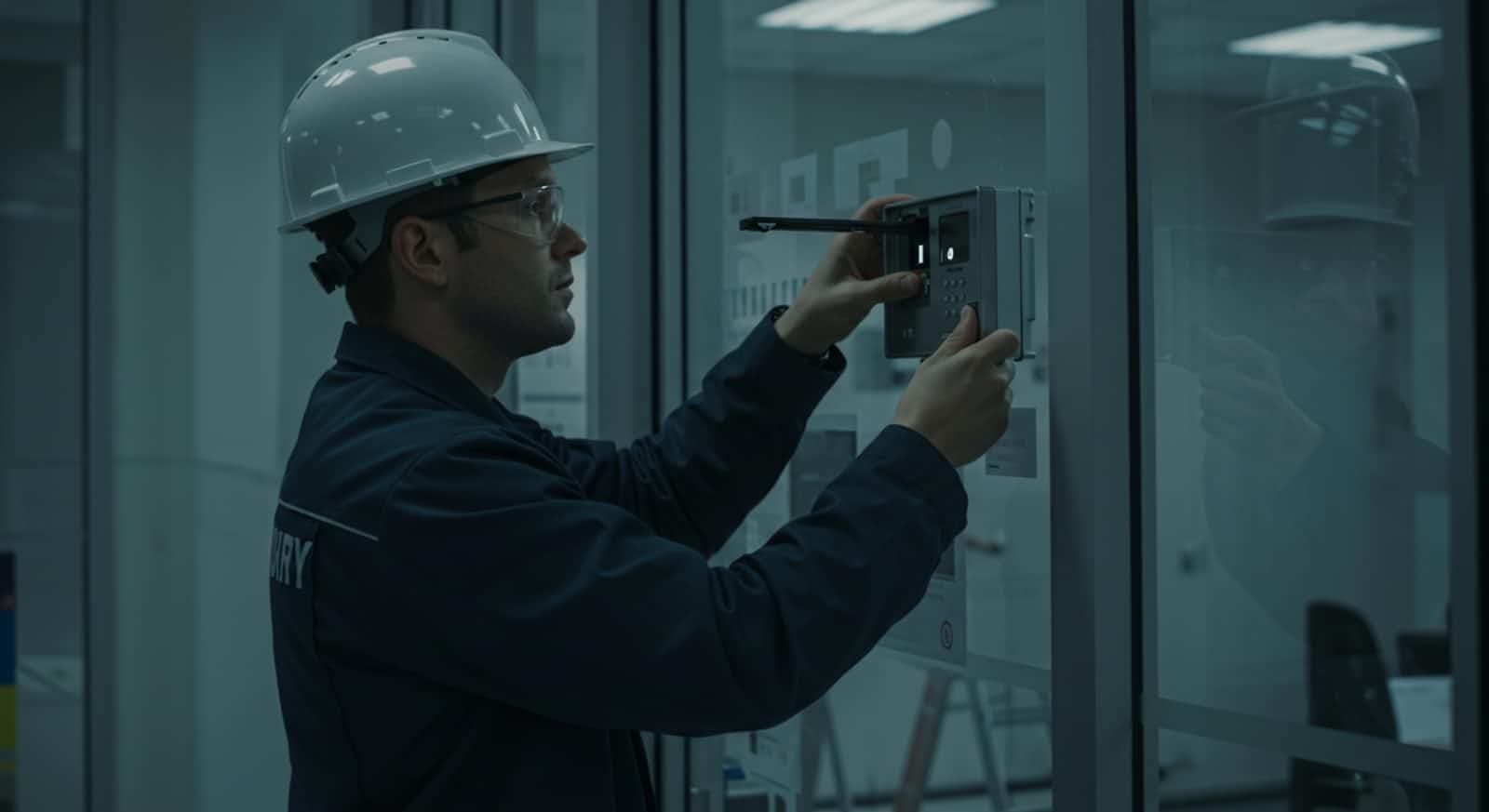
Unsafe practices in industrial environments — steel mills, construction sites, and oil & gas facilities — cause human suffering, production downtime, regulatory fines, and reputational damage. Presear Softwares Pvt. Ltd. presents a pragmatic, enterprise-ready computer vision (CV) solution for worker safety monitoring that tackles these problems head-on. This article explains the problem, describes how Presear’s CV system works, outlines technical and operational components, shows measurable benefits for the target industries, and walks through a realistic deployment approach so operations teams can move from pilot to scaled safety impact.
Large industrial sites are complex, dynamic, and inherently hazardous. Common failure modes include:
Workers not wearing required personal protective equipment (PPE) like helmets, gloves, or high-visibility vests.
Unsafe proximity to heavy machinery or energized equipment.
Unsafe workflows (carrying loads in restricted zones, standing in blind spots).
Fatigue, slips, and falls that are not noticed until after injury occurs.
Difficulty enforcing safety policy at scale and across multiple shifts and locations.
Traditional approaches — toolbox talks, periodic inspections, manual CCTV monitoring — rely heavily on human attention and are reactive. They miss transient violations, produce inconsistent enforcement, and don’t scale well. That’s where real-time computer vision excels: it continually watches, recognizes risky patterns, and triggers precise, timely interventions.
Presear Softwares’ worker safety monitoring solution combines modern computer vision models, edge computing, and enterprise integration to create a real-time safety layer over existing operations. Key capabilities include:
PPE detection: Automatic verification of hard hats, eye protection, gloves, and high-visibility clothing.
Intrusion and zone monitoring: Detection of personnel entering restricted or high-risk zones (e.g., furnace perimeters, scaffolding edges, pump rooms).
Proximity alerts: Measuring distance between workers and moving machinery or hazardous assets; escalating when thresholds are crossed.
Fall and slip detection: Recognizing sudden posture changes, ground impacts, and prolonged inactivity.
Wrong-way / unsafe posture detection: Identifying incorrect ladder ascent/descent, unsafe lifting posture, or carrying heavy loads without assistance.
Behavioral analytics & dashboards: Aggregated metrics, trend analysis, and root-cause insights to drive prevention programs.
Integration hooks: APIs, MQTT, or OPC UA connectors to feed alerts into existing SCADA, access control, or workforce management systems.
The solution is vendor-agnostic: it works with common IP cameras or purpose-built edge devices and can operate fully on-edge (low latency, minimal bandwidth) or in hybrid cloud-edge setups.
Data capture
High-definition video streams from fixed cameras, PTZs, or helmet cams feed into the system. For sensitive or bandwidth-constrained sites, small edge appliances process video on site.
Preprocessing & privacy
Frames are preprocessed to normalize lighting and resolution. Optional privacy filters (face blurring, anonymization) are applied before storage or transmission to meet compliance requirements.
Model inference on edge or cloud
Lightweight, optimized neural networks run inference on each frame. Models include object detectors (for PPE and tools), pose estimation (for posture/fall detection), and multi-object tracking (for proximity and zone analytics).
Rules engine & context
A configurable rules engine maps detection outputs to safety policies (e.g., “if a person enters furnace zone without helmet -> immediate alert”). Rules incorporate time-of-day, shift schedules, and contextual signals from plant systems.
Alerting & automation
Real-time alerts are sent to supervisors, safety officers, or automated systems (sirens, lights, machine interlocks). Alerts include a time-stamped snapshot or short video clip for rapid validation.
Analytics & feedback loop
Events are aggregated and visualized in dashboards. Heatmaps, KPI trends (PPE compliance rate, average time to intervene, near-miss counts), and shift-level comparisons enable targeted training and process changes. Models are retrained periodically with site-specific data to improve accuracy.
Steelmaking involves molten metal, heavy cranes, and moving conveyors. Even small lapses can be catastrophic. Presear’s CV solution reduces risk in these specific ways:
Ensures PPE compliance before workers enter high-risk zones like ladle handling or casting areas.
Detects workers in crane swing or rail corridors and automatically warns crane operators.
Produces actionable compliance reports (by shift, line, and contractor) for audits and insurance.
Construction sites are transient and chaotic; contractors rotate frequently and environments change daily.
Rapidly enforces site induction rules (helmet, boots, harness in fall-risk areas).
Monitors scaffolding edges, ladder usage, and heavy equipment proximity.
Integrates with access control so non-compliant personnel can be denied entry to active zones.
Refineries and rigs have explosive atmospheres and strict permit-to-work rules.
Detects unauthorized entry into hot work zones, gas flare perimeters, or pump rooms.
Monitors for unsafe behavior around high-pressure lines and detects spills or smoke early.
Works with hazardous area camera enclosures and maintains strict data-privacy and regulatory controls.
Organizations that deploy real-time CV safety monitoring can expect:
Reduced incident rates: Early detection and intervention prevent many near-misses from becoming accidents.
Lower compliance costs and fines: Automated policy enforcement reduces the risk of regulatory penalties.
Faster incident response: Real-time alerts shorten the time between a hazardous event and response.
Operational continuity: Fewer stoppages and lower lost-time incidents protect throughput and revenue.
Data-driven safety programs: Objective metrics let safety teams target the worst risks and demonstrate ROI to leadership.
Quantifying ROI depends on the site, but a simple model shows savings from avoided injuries, reduced downtime, and lower insurance costs often offset the system cost within 12–24 months at medium-to-large sites.
Discovery workshop
Map hazards, camera inventory, priority zones, and integration points (SCADA, access control, incident management).
Pilot deployment (4–8 weeks)
Select a representative area (e.g., a single production line, one building, or a construction lot). Install cameras/edge boxes, configure baseline models, and run without enforcement (monitor-only) to validate accuracy and false-positive rates.
Policy tuning & stakeholder alignment
Work with safety officers, HR, and union reps to define rules, alert recipients, and escalation procedures. Set privacy boundaries.
Operationalize alerts
Integrate with dispatcher radios, mobile apps, intercoms, or machine interlocks depending on required response patterns.
Scale & refine
Roll out to additional zones in phases, retrain models with site data, and optimize for lighting, dust, or camera angles.
Governance & continuous improvement
Monthly safety dashboards, quarterly model updates, and a cross-functional governance board keep the system aligned with business goals.
Accuracy & false alarms: Presear uses a human-in-the-loop approach during rollout — critical alerts are validated by supervisors until confidence reaches an acceptable threshold. Models are fine-tuned with local data to reduce false positives.
Privacy: The system supports on-edge anonymization and data retention policies. Only meta-events (e.g., “no helmet event at 09:32”) need to be stored long-term; video can be kept for short windows or on request.
Connectivity & latency: For latency-sensitive applications (machine interlocks, proximity cutoffs), Presear deploys inference-capable edge appliances so decisions happen in milliseconds without cloud dependence.
Integration complexity: Presear exposes flexible APIs and supports industry protocols (OPC UA, MQTT, REST) to plug into existing enterprise systems with minimal disruption.
PPE compliance rate (by shift / contractor)
Number of zone intrusions per week
Average time-to-intervention after alert
Near-miss events prevented (trend over time)
Incident rate (TRIR) before vs. after deployment
Cost savings from reduced downtime and claims
Computer vision does not replace human judgment or a mature safety culture. Instead, it augments it: constant, objective monitoring; precise alerts; and data that drives smarter training and engineering controls. For steel plants, construction firms, and oil & gas operators, Presear Softwares’ worker safety monitoring turns passive CCTV into an active safety partner — one that watches, reasons, and helps prevent accidents before they happen.
If you’d like, Presear can run a short pilot tailored to your site’s unique risks, demonstrate real-time alerts in your operating environment, and provide a clear business case with expected ROI. Safety isn’t a feature — it’s a foundation. Presear helps you build it, observe it, and continuously improve it.