

Computer Vision for Astronaut Safety Monitoring
I
Head (AI Cloud Infrastructure), Presear Softwares PVT LTD
Search for a command to run...
Head (AI Cloud Infrastructure), Presear Softwares PVT LTD
No comments yet. Be the first to comment.
Explore the forefront of AI innovation with Presear Softwares' AI Series, delving into machine learning for automation and neural networks for predictive analytics, unlocking AI's transformative potential across industries.
How Presear Softwares Empowered the National Institute of Wind Energy with Intelligent Asset Tracking
An ICSSR Project Implementation by Presear Softwares

A Hybrid Architecture for Voice-Driven Molecular Simulation and Quantum Chemistry Experiments

How PresearVisionXTrans™ Can Secure Large Gatherings like Holi
How Presear Engineered a Burst-Resilient Government Recruitment Portal using AI-Ready Scalable Architecture
Executive Summary
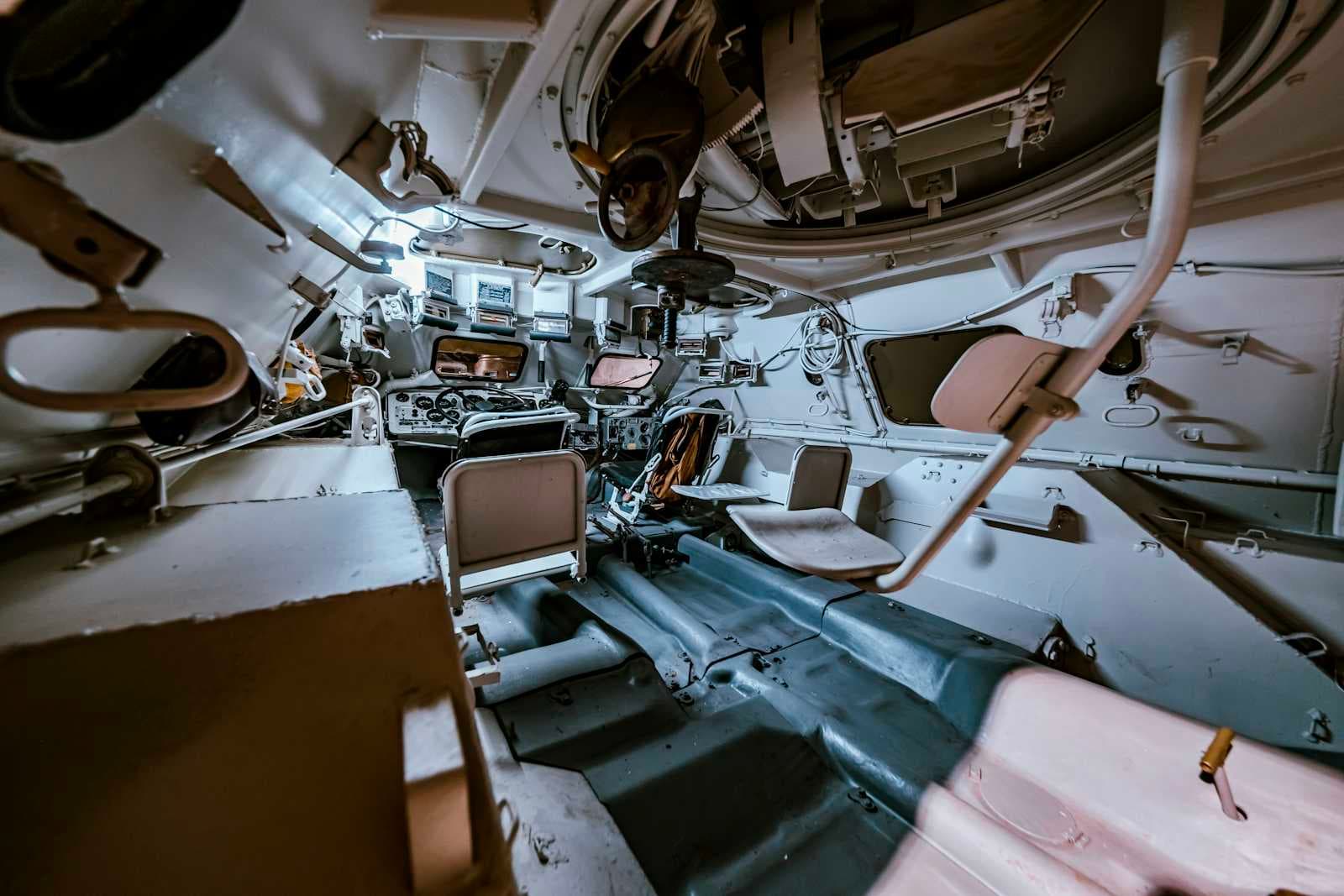
Long-duration human spaceflight and frequent activity aboard crewed spacecraft require continuous vigilance to maintain crew health, mission integrity, and asset protection. Monitoring astronaut activity manually is labor-intensive, error-prone, and inefficient—particularly during demanding mission phases, emergencies, or when mission control bandwidth is limited. Presear Softwares PVT LTD proposes an integrated computer vision (CV) solution tailored for spacecraft environments that automates real-time activity recognition, anomaly detection, and safety assurance while respecting bandwidth, privacy, and verification requirements. This article outlines the problem, technical approach, deployment roadmap, benefits, validation methods, and potential extensions for training centers and commercial space operators.
Human supervisors—whether crew members checking each other or ground controllers observing telemetry and periodic video—cannot scale to the 24/7, high-context awareness required in modern space operations. Limitations include:
Cognitive load and fatigue: Crew members have mission-critical responsibilities; adding continuous observation increases mental burden.
Time delays and bandwidth constraints: Ground-based monitoring depends on intermittent telemetry and limited downlink; real-time human oversight is not always feasible.
Sparse situational awareness: Manual logs and voice calls miss subtle patterns (micro-movements, gradual cognitive decline, equipment misuse) that precede incidents.
Training inefficiency: Reviewing hours of video for training and evaluation is time-consuming and costly.
A robust, onboard computer vision system can complement humans by providing continuous, objective, and interpretable monitoring that focuses attention where it’s needed.
Presear’s Computer Vision for Astronaut Safety Monitoring (CV‑ASM) is an end-to-end system combining lightweight onboard inference, edge-optimized models, secure data management, and ground- and onboard-facing dashboards. Key capabilities:
Activity recognition and task verification — Detects whether astronauts are carrying out procedures (e.g., suit donning, sample handling, experiment steps) and verifies task completion against checklists.
Anomaly detection — Spots deviations from expected motion patterns, unattended objects, spills, or unusual human postures (indicators of injury or incapacitation).
Fatigue and cognitive markers — Uses subtle behavioral cues (movement tempo, micro-pauses, irregular task cadence) to flag potential fatigue or cognitive overload.
Equipment interaction monitoring — Tracks tool usage, connector alignment, and instrument states to catch misuse or hazardous interactions early.
Privacy‑first data handling — Onboard anonymization, local aggregation, and selective downlink reduce privacy risks and bandwidth usage.
The architecture is modular, allowing integration with spacecraft avionics, life support alerts, and existing communication channels.
Cameras: Low-light, wide dynamic range cameras with fisheye or narrow FOV options depending on the module. Redundant placements to eliminate blind spots.
Processing: Radiation‑tolerant or hardened edge accelerators when possible, otherwise fault-tolerant commercial hardware with watchdogs and graceful degradation.
Storage: Circular buffer with encrypted partitions; critical events and aggregated metadata preserved for long-term storage.
Activity recognition models: Small-footprint 3D CNNs and transformer-lite models trained on space-relevant activities using a mix of synthetic and curated terrestrial datasets. Models are quantized and pruned for onboard deployment.
Anomaly detection: Unsupervised and semi-supervised approaches (autoencoders, contrastive learning) build a model of normal operations and surface outliers for human review.
Multi-modal fusion: Optional fusion with IMU data, air-quality sensors, and crew biometrics to improve confidence and reduce false positives.
Explainability layer: Saliency maps, keyframe extraction, and short labeled clips accompany alerts for fast human triage.
Onboard processing: Raw video is processed locally; only event metadata, anonymized thumbnails, and short encrypted clips are stored or transmitted.
Selective downlink: Priority-based uplink where critical alerts and summarized daily reports are sent to mission control, reducing bandwidth demand.
Access control & audit logs: Role-based permissions and tamper-evident logs ensure traceability and compliance.
Research & Ground Validation: Create and curate a dataset of representative activities using analog environments (mockups, parabolic flights, neutral buoyancy labs). Iterate models in a lab setting.
Pilot in Training Centers: Deploy in astronaut training facilities to validate performance, gather additional data, and integrate with training workflows.
Suborbital/Test Flight: Conduct short-duration flight tests to evaluate environmental robustness (vibration, lighting, camera motion).
On-Orbit Demonstration: Partner with private operators or space agencies for a staged on-orbit demo with strict safety checks.
Operational Rollout: After verification, integrate into mission workflows, with continuous learning and over-the-air (OTA) model updates subject to certification protocols.
CV‑ASM can detect falls, loss of consciousness, or abnormal motions and immediately notify crew and ground control with contextualized video clips, enabling faster diagnosis and response.
Automated verification of checklist steps reduces human error. For time-critical operations, the system can provide live prompts or automated confirmations to the crew.
By monitoring tool usage and equipment interactions over time, the system identifies patterns that precede malfunctions (e.g., repeated misalignment), enabling pre-emptive maintenance.
Training centers benefit from objective performance metrics, tagged video segments, and heatmaps of motion efficiency—accelerating skill acquisition and reducing instructor workload.
Subtle behavioral markers tied to fatigue or degraded cognitive performance can trigger supportive interventions—rest recommendations, alertness checks, or task reallocation.
Presear approaches validation with rigorous test matrices:
Simulated fault injection to evaluate false positive/negative behavior and fail‑safe modes.
Human-in-the-loop trials in training centers to calibrate alert thresholds and minimize nuisance alerts.
Environmental testing for vibration, thermal, and radiation-hardness scenarios when applicable.
Red Teaming & Privacy Audits to ensure compliance with agency policies on crew privacy and data protection.
Certification pathways will depend on the end customer (space agencies vs. commercial operators), and Presear supports documentation and traceability required for system acceptance.
Latency vs. accuracy tradeoffs: For life‑critical alerts, Presear prioritizes low-latency lightweight models with conservative thresholds; for analytics, more complex models run during low-load windows.
Power and thermal budgets: Models are optimized for constrained environments with power-saving inference scheduling.
Human factors design: Alerts are designed to be informative and non-intrusive—escalating only when confidence is high or when multiple modalities corroborate anomalies.
Data sovereignty and export controls: Presear implements region- and mission-specific policies for data handling and encryption standards.
Space agencies & private operators: Reduced incident response time, improved procedural compliance, and lower long-term operational costs through predictive maintenance.
Crew safety and morale: Objective safety nets increase crew confidence and reduce cognitive load.
Training centers & industry partners: Faster trainee throughput and higher quality assurance for mission readiness.
Scientific missions: Better preservation of experiment integrity through automated monitoring of handling and environmental context.
Collaborative multi‑crew monitoring: Distributed inference across modules for coordinated situational awareness during EVAs or complex operations.
AR-assisted guidance: Combine CV insights with augmented reality overlays for step-by-step procedural guidance.
Federated learning: Onboard model personalization without raw data transfer, enabling privacy-preserving continual learning across missions.
Cross-domain commercialization: Adaptations for submarine operations, hazardous industrial environments, and remote medical facilities.
Presear Softwares PVT LTD’s Computer Vision for Astronaut Safety Monitoring offers a pragmatic, privacy-conscious, and technically mature path toward continuous, automated safety oversight in spaceflight. By blending edge-optimized models, selective telemetry, and human-centered alerting, the system enhances crew safety, reduces operational burden, and contributes measurable mission value—from improved training outcomes to more reliable in-flight operations. As human space activity grows, CV‑ASM positions Presear as a trusted partner delivering scalable AI solutions that make space missions safer, smarter, and more efficient.
For pilot inquiries, dataset partnerships, or integration discussions with Presear Softwares PVT LTD, contact our Aerospace Solutions team.