Automated Audit & Reporting — A Presear Softwares PVT LTD Use Case

I
Head (AI Cloud Infrastructure), Presear Softwares PVT LTD
Search for a command to run...
Head (AI Cloud Infrastructure), Presear Softwares PVT LTD
No comments yet. Be the first to comment.
Explore the forefront of AI innovation with Presear Softwares' AI Series, delving into machine learning for automation and neural networks for predictive analytics, unlocking AI's transformative potential across industries.
How Presear Softwares Empowered the National Institute of Wind Energy with Intelligent Asset Tracking
An ICSSR Project Implementation by Presear Softwares
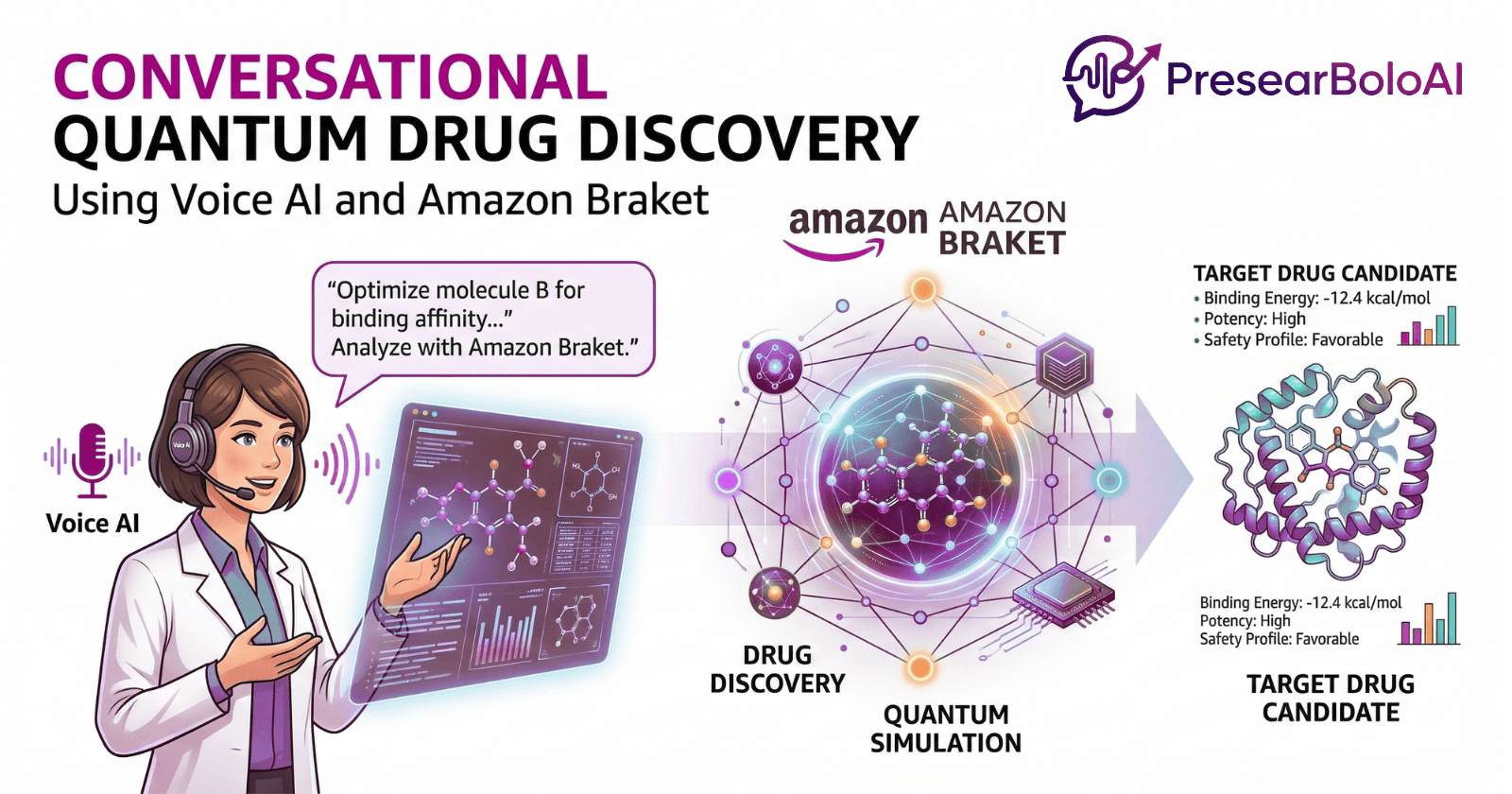
A Hybrid Architecture for Voice-Driven Molecular Simulation and Quantum Chemistry Experiments
How PresearVisionXTrans™ Can Secure Large Gatherings like Holi
How Presear Engineered a Burst-Resilient Government Recruitment Portal using AI-Ready Scalable Architecture
Manual audit processes—spreadsheets, email chains, scattered evidence files, and long review cycles—are familiar to almost every organization. They create bottlenecks, increase risk, and make it difficult to deliver timely, accurate assurance to stakeholders. Presear Softwares PVT LTD builds software solutions to replace that patchwork with a unified, automated auditing and reporting platform that speeds audits, raises quality, and reduces compliance risk. This article explains the problem in practical terms, describes Presear’s solution, walks through an example audit workflow, and quantifies the benefits organizations can expect.
Fragmented evidence and tooling. Evidence lives in different systems—ERP, HR systems, file shares, email—often with incompatible formats. Auditors spend disproportionate time locating, consolidating, and validating evidence rather than assessing control effectiveness.
Inconsistent procedures and human error. Different auditors follow different checklists and judgment standards. This inconsistency produces variable outcomes and creates challenges when multiple teams or regulators review results.
Slow, resource-intensive cycles. Manual sampling, document collection, and reconciliation are time-consuming. Audits that should take days extend into weeks or months, delaying remediation.
Lack of continuous monitoring. Manual audits are periodic snapshots. By the time an issue is discovered, the risk may already have materialized.
Poor reporting and traceability. Building clear, regulator-ready reports from disparate notes and spreadsheets is error-prone; maintaining an audit trail for each finding is hard.
These issues elevate operational, financial, and regulatory risk. Organizations need an approach that provides timeliness, consistency, and defensible evidence—without ballooning audit headcount.
Presear Softwares PVT LTD delivers an automated audit and reporting platform designed specifically to alleviate the problems above. The platform integrates with enterprise systems, automates evidence collection and testing, enforces consistent procedures, and generates clear, auditable reports.
Key components:
Unified data connectors. Presear connects to ERPs, HRIS, financial systems, cloud platforms, email, and file stores through secure connectors and API integrations. Data mapping normalizes fields across sources so evidence is comparable.
Rule-based controls and testing engine. Organizations codify controls and sampling rules. The engine runs continuous or scheduled tests—reconciliations, exception detection, segregation-of-duty (SoD) checks, policy compliance—automatically.
Workflow & reviewer orchestration. Findings flow into configurable workflows (triage → investigation → remediation → closure) with role-based assignments and SLAs. Notifications and dashboards keep stakeholders informed.
Evidence capture & chain-of-custody. Every test result links to the raw evidence, capture date/time, system source, and the transformation applied. Immutable logs and versioning create a defensible audit trail.
Smart reporting & templates. The platform produces regulator-ready reports and customizable dashboards, highlighting risk trends, top findings, and remediation status. Reports are exportable to PDF, Excel, or secure portals.
Analytics & continuous monitoring. Built-in analytics spot recurring issues, root-cause patterns, and control degradation over time, enabling proactive remediation.
Security & compliance. Role-based access control, encryption-at-rest and in-transit, and detailed access logs help meet regulator expectations and internal governance policies.
Imagine an internal audit team needs to audit vendor payments for potential duplicate payments and unauthorized vendors.
Define scope and controls. The audit manager configures the audit in Presear: scope (AP payments Q1), controls to test (duplicate invoice detection, vendor master changes), and thresholds (identical amount & vendor within 30 days = duplicate candidate).
Connect and ingest data. Presear pulls AP ledger, payment register, vendor master, and supporting invoices from connected systems. Data normalization converts vendor IDs and date formats to a common schema.
Automated testing. The testing engine runs duplicate detection algorithms, SoD checks (who can create vendors vs. approve payments), and reconciliation between invoices and ledger entries.
Flagging & triage. Results are categorized by severity. High-risk findings (e.g., payments to vendors with recent master changes by the approver) are routed to senior investigators with a deadline.
Evidence review. Investigators access the platform and view each finding alongside the raw invoice PDF, payment transaction, and vendor master change history—no manual collection required.
Remediation & verification. Remediation tasks (e.g., vendor cleanup, process changes) are assigned to operations, with verification steps for audit to confirm closure. All steps are timestamped and logged.
Reporting. The platform generates a regulator-ready report summarizing the audit scope, methodology, sample sizes, findings, remediation status, and an immutable evidence trail.
Continuous checks enabled. After closure, the audit’s tests remain active on a watchlist, flagging regressions so the control owner can act before the next audit cycle.
Automated sampling that adheres to audit standards (random, stratified, risk-based) removes selection bias and saves time.
Configurable control libraries allow the company to reuse and adapt common tests (e.g., payroll exceptions, expense reimbursements).
Collaborative investigator workspace where notes, comments, and attachments are co-located and searchable.
Audit trail & version control for every artifact, ensuring defensibility in front of regulators or external auditors.
Risk scoring and heatmaps that quickly show where governance attention is required.
Pre-built regulatory templates for common frameworks (e.g., SOX, ISO, GDPR controls) to accelerate compliance reporting.
Speed: What used to take weeks can be reduced to days or hours. Automated evidence collection and testing cut data preparation time dramatically.
Consistency: Rule-based tests ensure every audit uses the same definitions and procedures, reducing variability and improving comparability across time and teams.
Accuracy and defensibility: Automated checks reduce human error; detailed evidence chains make reports defensible to external reviewers.
Resource leverage: Audit teams can reallocate time from manual tasks to higher-value activities—risk assessment, advisory, and strategic oversight.
Continuous assurance: Moving from periodic audits to continuous monitoring reduces the window of exposure for issues and enables faster remediation.
Cost savings & ROI: Fewer labor hours, lower error remediation costs, and faster regulatory response lead to clear bottom-line savings. In many client contexts Presear’s customers see multi-month payback on implementation.
Presear follows a pragmatic rollout approach to minimize disruption and maximize value:
Discovery & prioritization. Identify high-risk processes and quick-win audit areas (e.g., AP, expense claims, payroll). Define KPIs and success metrics.
Pilot. Implement a focused pilot (one process, one control set) to validate connectors, rule logic, and reporting. The pilot demonstrates value and builds internal champions.
Scale. Expand connectors across systems and roll out additional control libraries and audit types. Introduce role-based training and workflows.
Governance & continuous improvement. Set up an audit center of excellence to manage control libraries, calibrate rules, and evolve analytics as the business changes.
Managed services (optional). For organizations that prefer a hybrid model, Presear offers managed audit-as-a-service where Presear’s specialists run automated checks and deliver findings to the client’s internal audit function.
A mid-size manufacturing firm historically ran quarterly vendor audits that averaged 6 weeks each and involved three full-time auditors. After deploying Presear:
Pilot on AP duplicate payments cut investigation time by 80% (from 120 hours to 24 hours).
Monthly continuous monitoring identified a vendor-master misconfiguration that would have led to repeated duplicate payments; remediation prevented projected overpayments of $250K annually.
Annual audit headcount reduced by one FTE; remaining auditors moved to proactive risk advisory, improving control design.
External auditor validation completed in two days rather than two weeks thanks to the prepared evidence trail.
This kind of outcome is representative: automation accelerates detection, lowers cost, and improves governance quality.
Start small, show value quickly. Pick a process with accessible data and measurable outcomes to build momentum.
Codify controls in human-readable rules. Keep rules understandable to auditors so they can be reviewed and tuned.
Maintain data quality discipline. Automation reveals dirty data quickly; invest in data hygiene early.
Embed change management. Train audit staff, control owners, and process teams on new workflows—automation succeeds when humans adapt.
Measure and iterate. Track cycle time, findings closure rate, and false-positive rates, and refine rules accordingly.
Overreliance on automation. Automation should augment—not replace—critical auditor judgment. Presear includes review checkpoints and human-in-the-loop workflows.
False positives. Initial rule tuning may generate noise; Presear provides analytics to optimize thresholds.
Integration complexity. Some legacy systems require adapters; Presear’s implementation team handles complex connectors and data mapping.
Automated auditing and reporting aren’t futuristic aspirations—they’re practical, high-value improvements that organizations can implement today. For internal audit teams, regulatory compliance units, and corporate governance offices, Presear Softwares PVT LTD provides a pragmatic platform that replaces manual effort with repeatable, auditable, and transparent processes. The result is faster audits, more reliable findings, continuous assurance, and a better allocation of scarce audit resources toward strategic risk management.
If your organization struggles with slow audit cycles, inconsistent findings, or a lack of continuous control visibility, Presear’s automated audit & reporting solution can turn audit from a cost center into a strategic enabler—improving compliance posture while delivering measurable time and cost savings.
Want a tailored audit automation plan for your business? I can draft a one-page pilot plan (scope, objectives, KPIs, and estimated timeline) for a specific process—tell me which process you’d like to start with (e.g., Accounts Payable, Payroll, Expense Reimbursements, Vendor Master, or IT access controls) and I’ll build it.