
Audience Sentiment Analysis — Use Case for Presear Softwares PVT LTD

I
Head (AI Cloud Infrastructure), Presear Softwares PVT LTD
Search for a command to run...
Head (AI Cloud Infrastructure), Presear Softwares PVT LTD
No comments yet. Be the first to comment.
Explore the forefront of AI innovation with Presear Softwares' AI Series, delving into machine learning for automation and neural networks for predictive analytics, unlocking AI's transformative potential across industries.
How Presear Softwares Empowered the National Institute of Wind Energy with Intelligent Asset Tracking
An ICSSR Project Implementation by Presear Softwares

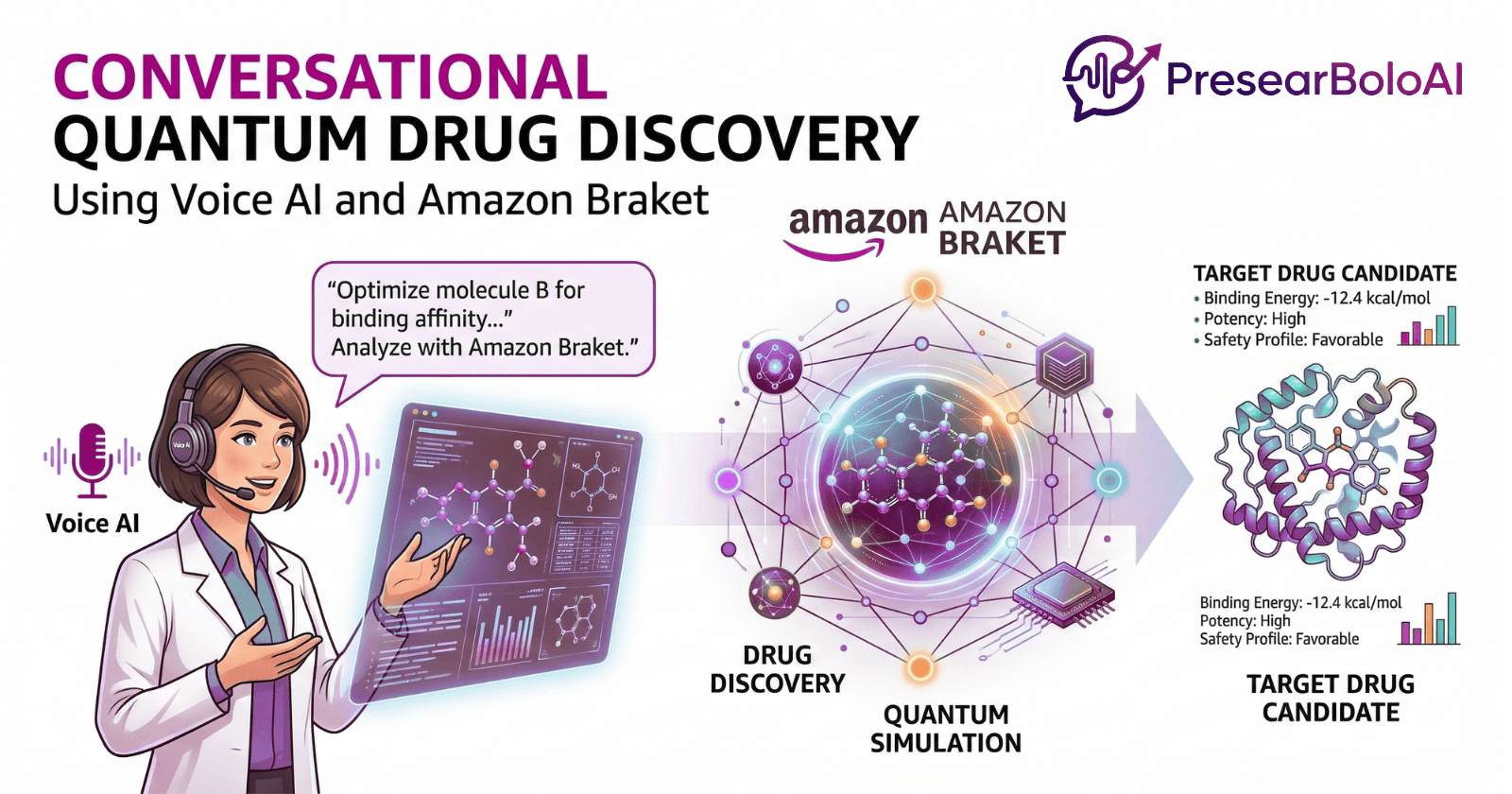
A Hybrid Architecture for Voice-Driven Molecular Simulation and Quantum Chemistry Experiments
How PresearVisionXTrans™ Can Secure Large Gatherings like Holi
How Presear Engineered a Burst-Resilient Government Recruitment Portal using AI-Ready Scalable Architecture
In the streaming age, understanding audience reaction is no longer a luxury — it's mission-critical. For studios, OTT platforms, and marketing teams, viewer sentiment can shape content strategy, inform promotional campaigns, and determine licensing and monetization choices. Presear Softwares PVT LTD offers a robust Audience Sentiment Analysis solution that ingests multi-platform data, synthesizes reactions in near real-time, and produces actionable insights. This use case explores the problem, the Presear solution, implementation architecture, measurable benefits, and a sample customer journey demonstrating how organizations convert sentiment intelligence into revenue and retention gains.
Viewers express opinions across an ever-growing ecosystem: social networks (Twitter/X, Instagram, Threads), review sites (IMDb, Rotten Tomatoes), forums (Reddit, niche fan communities), comment sections, and direct feedback channels. These signals are:
Fragmented — dispersed across platforms with different data models and access patterns.
Noisy — full of memes, sarcasm, slang, and non-standard spellings that traditional keyword searches miss.
Time-sensitive — sentiment around a release window can spike and shift rapidly.
Contextual — the same phrase can have opposite meanings depending on show context, regional slang, or cultural references.
Marketing teams waste weeks manually compiling reports; studios miss early warning signs (a controversial scene, tone mismatch, or flawed localization) that could be addressed quickly; OTT platforms struggle to prioritize content for recommendations and promotion without reliable sentiment signals.
Presear’s Audience Sentiment Analysis platform is built to solve for scale, speed, and nuance. The platform unifies data collection, applies advanced natural language understanding and multimodal analysis, and delivers dashboards and automated workflows that drive concrete actions.
Multi-platform collection: connectors for social media APIs, review aggregators, closed caption logs, in-app feedback, and community forums. Data is normalized into a common schema.
Advanced sentiment models: transformer-based NLP fine-tuned on entertainment-specific corpora — trained to detect sarcasm, comedic praise, disappointment, and comparative sentiment (e.g., "better than S1").
Emotion & intensity scoring: beyond positive/negative/neutral, the platform measures emotional tone (joy, anger, sadness) and intensity (mild, strong) so teams can prioritize responses.
Topic & scene attribution: AI models tag sentiment at the granular level — episode, scene, character, plotline, or technical attribute (sound, subtitles, pacing).
Multimodal analysis: analysis of images, memes, GIFs, and video clips to capture sentiment expressed through visuals, not just text.
Regional & language support: models tuned to local idioms, dialects, and languages to avoid blind spots in international releases.
Real-time alerts & workflows: thresholds, anomaly detection, and automated workflows that route issues to moderation, PR, or content teams.
Privacy-first design: respects platform TOS and user privacy; supports data minimization, PII detection and redaction, and enterprise-grade security.
Ingestion layer: scalable stream processors and connectors pull public posts, reviews, transcripts, and in-app feedback. Data is enriched with metadata (timestamp, geolocation, device type when available).
Normalization & pre-processing: language detection, tokenization, profanity filtering, and meme OCR extraction. Non-text media are converted into embeddings for downstream models.
Analysis core: ensemble models — sentiment classifier, emotion detector, topic extractor, named-entity recognition, sarcasm detector, and visual sentiment model — work together to tag each item.
Aggregation & attribution: signals are aggregated across time windows, region, and show elements (season, episode, character). Scene-level attribution uses subtitle timestamps and clip matching to link comments to moments in the content.
Insights & action layer: dashboards, scheduled reports, automated alerts, API endpoints, and integrations (Slack, Asana, Jira, CRM) to trigger follow-ups.
Storage & compliance: secure long-term storage for aggregate analytics; logs and raw data follow retention policies and compliance requirements.
Discovery & data mapping (Week 1–2): identify target titles, platforms, languages, and KPIs (e.g., sentiment lift, crisis detection time).
Connector setup (Week 2–3): activate and validate APIs and ingestion pipelines for selected sources.
Model tuning (Week 3–4): fine-tune sentiment and sarcasm models on the client’s historical feedback (if available) and region-specific data.
Dashboard & rule configuration (Week 4–5): set up role-based dashboards for creative, marketing, analytics, and moderation teams; configure alert thresholds and workflows.
Pilot run & validation (Week 5–6): run the system through a release cycle or targeted window; validate signal quality with human-in-the-loop reviews.
Optimization & scale (Week 6–8): extend connectors, tune thresholds, and onboard additional teams.
Scenario: A studio releases a high-budget sci-fi series across multiple regions. During the first 48 hours, social chatter spikes. Presear’s system:
Detects a rapid rise in "disappointment" and "confusion" emotions tied to Episode 2 in Spanish-speaking regions.
Scene-level attribution shows complaints centered on a poorly localized line and subtitle timing causing a joke to fall flat.
Platform triggers an alert to the localization team and raises a ticket in the studio’s Jira backlog with timestamped evidence and suggested fixes (subtitle timing adjustment and alternate translation).
Within 24 hours, corrected subtitles are pushed, and sentiment in those regions moves from "disappointment" to "amused/positive" over the next 48 hours.
Outcome: The studio avoided a PR issue, improved viewer experience quickly, and reduced churn. The cost of rapid remediation was a fraction of the potential loss from negative word-of-mouth and reduced completion rates.
Presear’s clients typically see measurable benefits along these dimensions:
Faster crisis detection: time-to-detect negative spikes shortened from days to hours.
Retention & completion lift: targeted fixes (subtitles, pacing, metadata) improve episode completion rates and reduce early drop-offs.
Marketing optimization: sentiment-informed creative A/B tests increase campaign engagement and lower CPAs by focusing spend on themes audiences favor.
Content strategy: long-term sentiment trends inform commissioning decisions — which characters or arcs resonate and which don’t.
Operational efficiency: automated workflows reduce manual monitoring hours and free teams to work on higher-value tasks.
Suggested KPIs to track during a pilot:
Mean time to detect (MTTD) sentiment spikes
Mean time to remediate (MTTR) issues identified via the platform
Percentage change in episode completion rates post-remediation
Change in paid conversion or trial-to-subscription rates for promoted titles
Volume of tickets auto-generated and resolved through the platform
Presear’s approach places high importance on responsible monitoring:
Data minimization: collects only public, permitted data and uses aggregation to avoid overreach.
PII protection: automatic detection and redaction workflows ensure Personally Identifiable Information is not stored unnecessarily.
Bias mitigation: models are audited for demographic and linguistic bias; families of tests are run to ensure fairness across regions and dialects.
Human-in-the-loop moderation: while automation flags likely issues, final intervention is routed to humans for sensitive decisions (e.g., takedowns, legal responses).
Entertainment-tuned models: Presear invests in models trained on scripts, subtitles, reviews, and social chatter specific to film & TV, which improves accuracy on domain-specific language.
Scene-level attribution: few vendors offer accurate mapping between a social comment and the exact moment in a show — this capability dramatically shortens root-cause analysis.
Multimodal signal processing: capturing memes and short clips lets teams measure sentiment expressed visually, which is increasingly how fandom communicates.
Action-focused design: pre-built workflows (localization, PR, content ops) and deep integrations with studio tooling mean insights translate into action quickly.
Presear offers tiered pricing tailored to needs: pilot (single title, limited sources), standard (multiple titles, regional support), and enterprise (global ingestion, SLA-backed uptime, custom models). ROI is typically realized through:
Reduced churn from improved viewer experience
Lowered crisis management costs and PR spend
Increased marketing efficiency from sentiment-driven targeting
Better content investment decisions lead